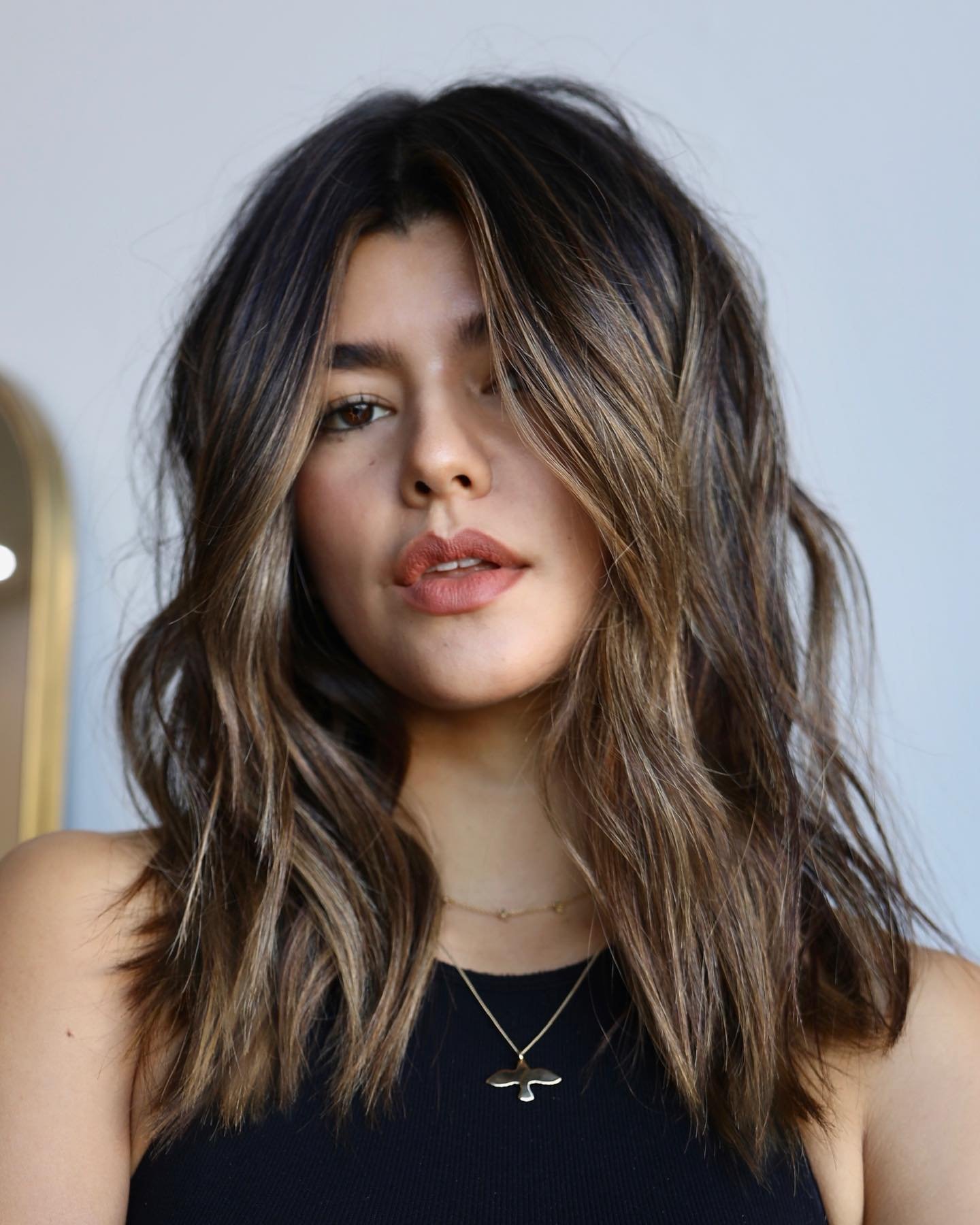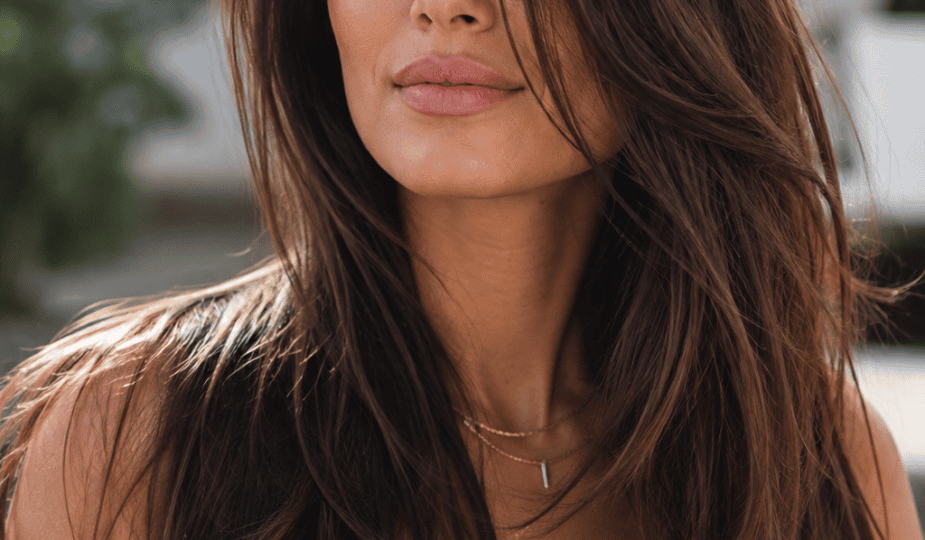
A square face shape comes with a strong jawline, a wide forehead, and clean, angular lines. That structure photographs beautifully, but the wrong haircut can make those angles look sharper instead of softer. The right cut does the opposite: it rounds things out, adds movement near the jaw, and pulls focus toward the eyes and cheekbones instead of the corners of the face.
This list breaks down 15 hairstyles that soften a square jawline without erasing the structure that makes this face shape striking in the first place. Every cut below focuses on the same goal: adding curve, layering, and movement exactly where the face needs it.
How to Tell If You Have a Square Face Shape
Before picking a style, it helps to confirm the shape. A square face shape has three defining traits:
- A broad forehead that’s roughly the same width as the jawline
- A strong, angular jawline with minimal taper toward the chin
- Straight sides running from temple to jaw with little curve
If the forehead, cheekbones, and jaw all measure close to the same width, that’s a square shape. The goal with hairstyling isn’t to hide the jaw — it’s to soften the transition between the jaw and the neck so the face reads as more oval and less boxy.
1. Long Layers With Face-Framing Pieces
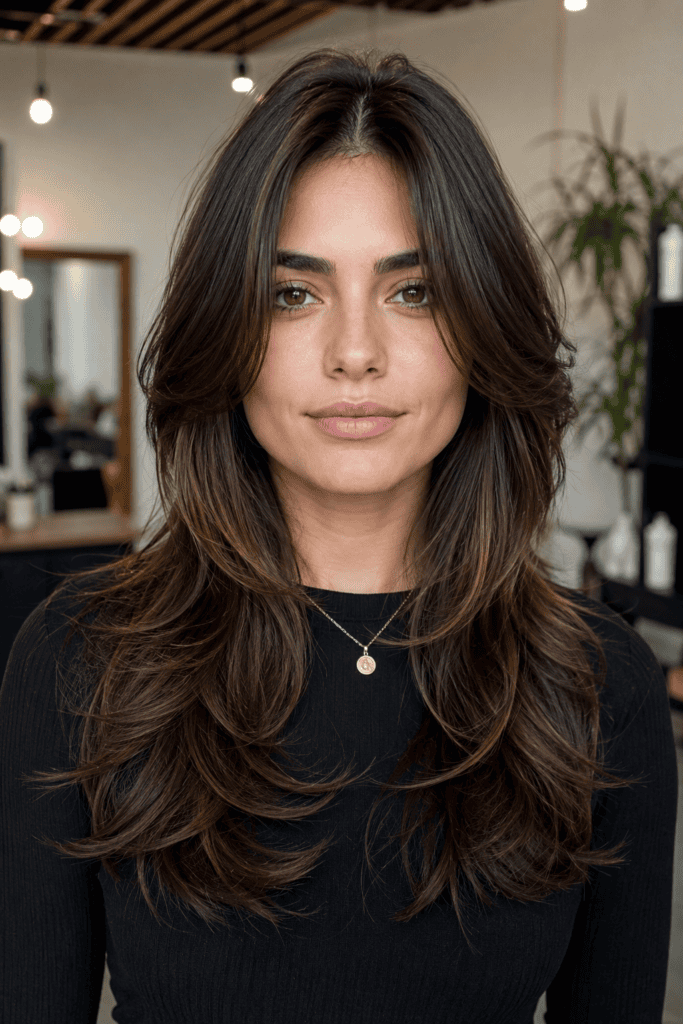
Long layers cut around the cheekbones and jaw create the single most reliable fix for a square face. The layers break up the straight line of the jaw with soft, angled pieces that fall at different lengths.
- Layers should start at or slightly below the cheekbone
- Ends should be feathered, not blunt
- Face-framing pieces work best when they hit right at the jawline, not above it
This works because the eye follows the movement of the layers instead of tracing the hard edge of the jaw.
2. Soft, Side-Swept Bangs
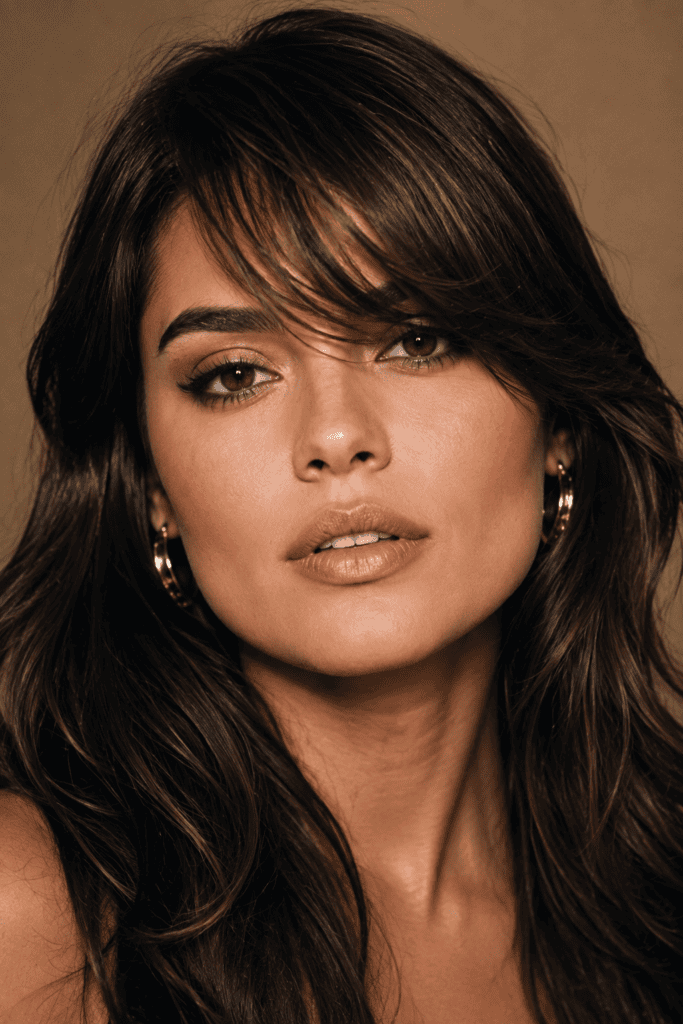
Blunt, straight-across bangs add another horizontal line to a face that already has plenty of them. Side-swept bangs do the opposite — they create a diagonal line that breaks up the square shape and draws attention upward toward the brow and eyes.
Side-swept bangs work on almost any length, from a long bob to hair past the shoulders. The key is the angle: bangs should sweep across the forehead rather than sitting flat.
3. The Curtain Bang
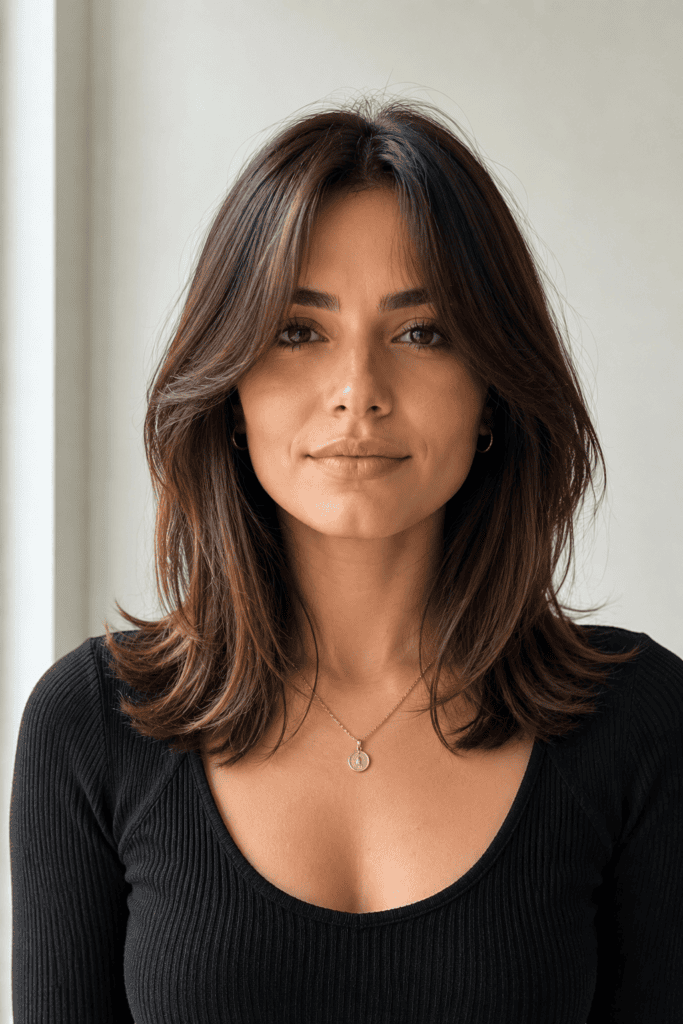
Curtain bangs part in the center and sweep out on both sides, framing the face like a soft set of parentheses. That framing effect rounds the forehead and pulls the eye toward the center of the face instead of the outer edges of the jaw.
Curtain bangs pair especially well with medium-length hair, since the length gives the curtain shape room to fall naturally instead of looking stiff.
4. Long Bob (Lob) With Waves
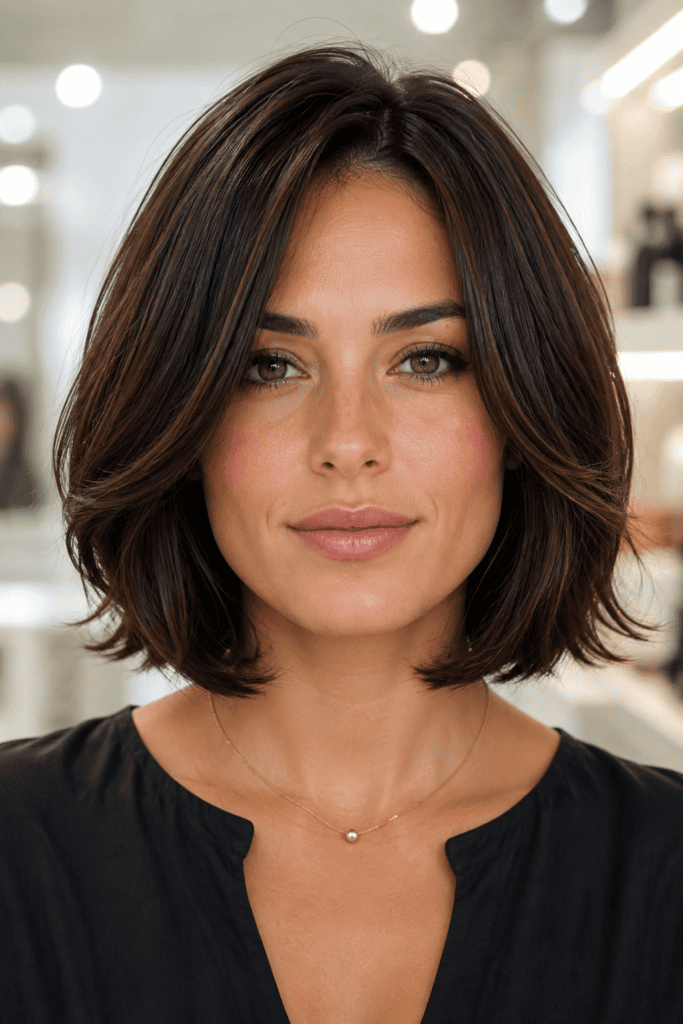
A lob — a long bob that hits between the collarbone and shoulders — is one of the most versatile cuts for a square jaw, but only with the right texture. Straight, blunt lobs sit right at jaw level and emphasize the width there. Add waves, and the story changes completely.
- Loose, beachy waves soften the ends
- Waves should start below the jaw, not above it
- A slight outward flick at the ends adds curve exactly where the jaw is widest
5. Layered Bob With Rounded Ends
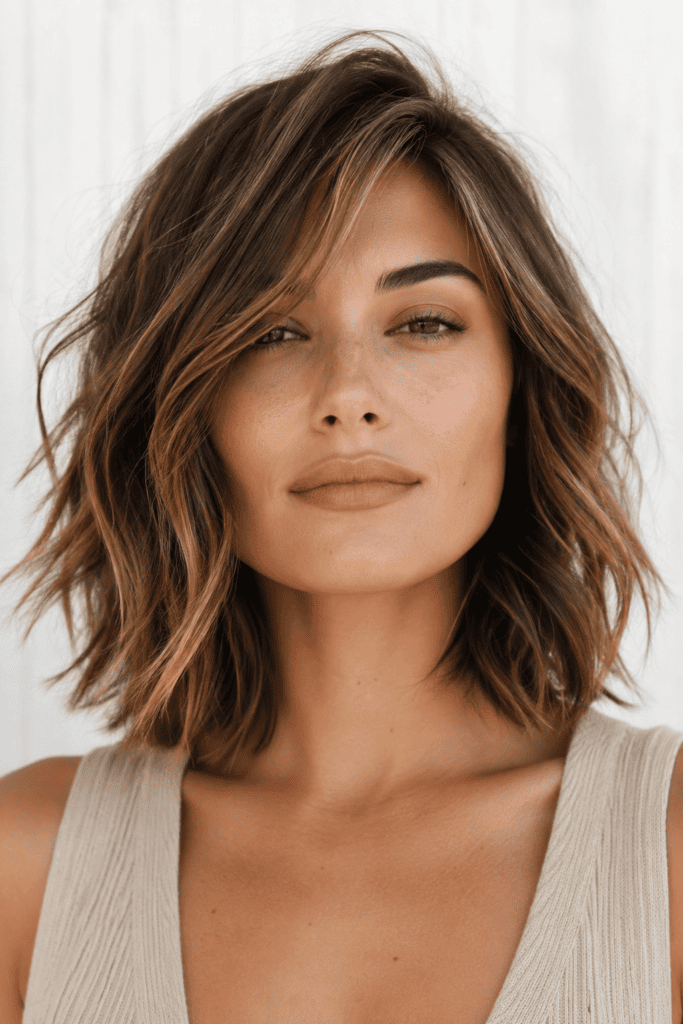
For anyone who wants short hair without emphasizing the jawline, a layered bob with rounded, curved ends is the move. Blunt-cut bobs are a common mistake for square faces because the straight line runs parallel to the jaw and doubles down on the angularity.
Ask a stylist for round-cut, feathered layers at the ends instead of a one-length blunt cut. This small adjustment changes the entire effect of a short cut.
6. Shag Haircut
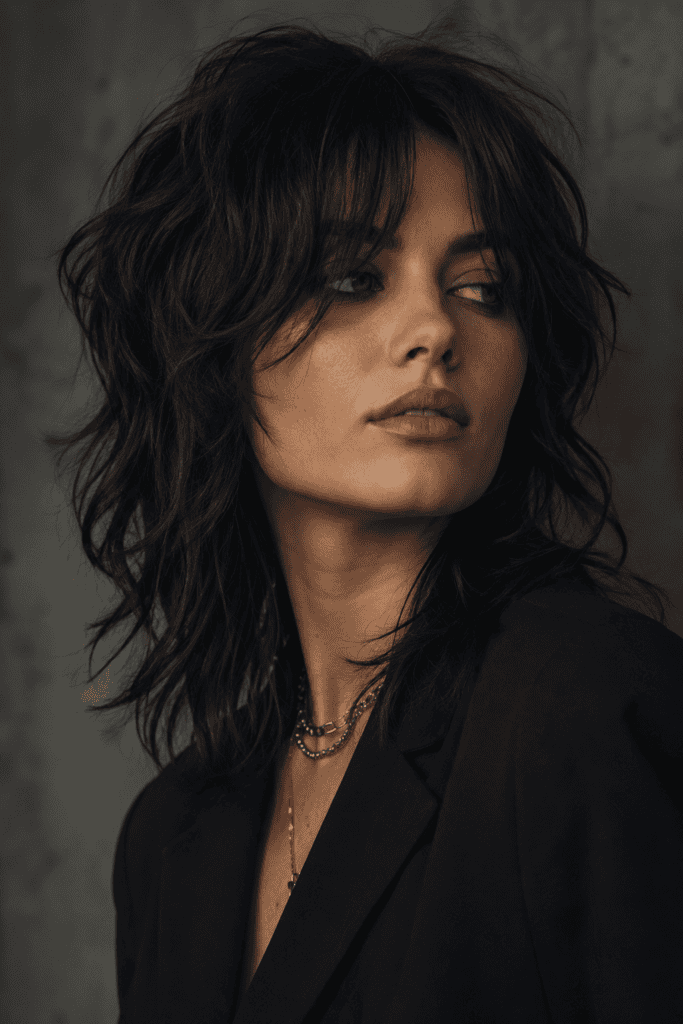
The shag haircut brings choppy, textured layers throughout the length of the hair, and that texture is exactly what a square face benefits from. Movement and unevenness break up strong lines, and the shag is built entirely on movement.
- Works on short, medium, and long hair
- Layers should be heaviest around the face
- Pairs well with curtain bangs for extra softening around the forehead
7. Long, Loose Curls
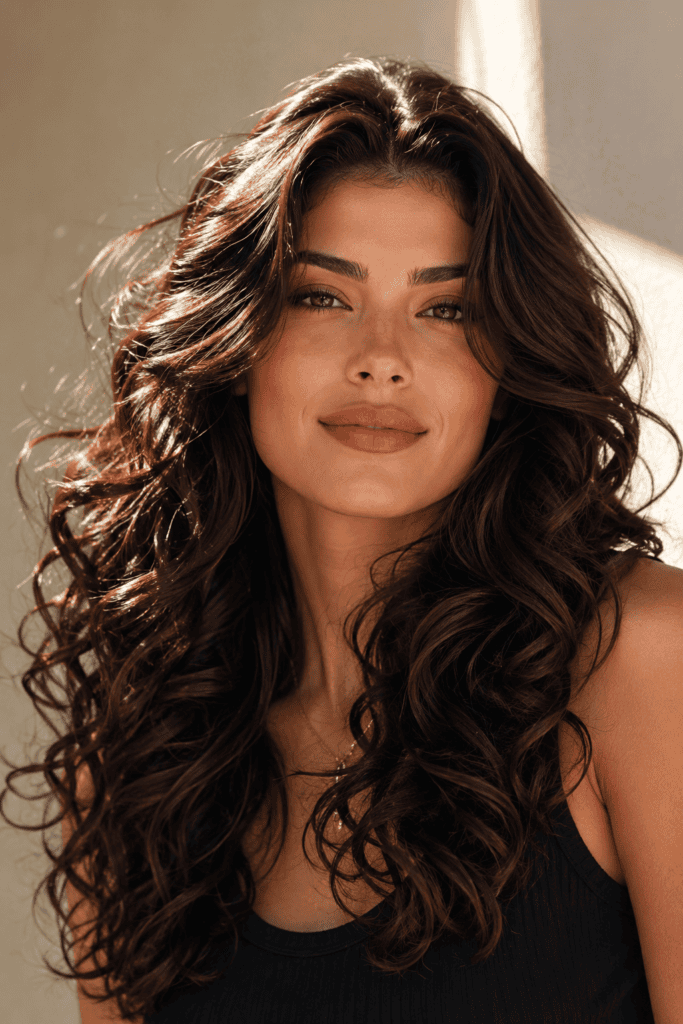
Curls — natural or styled — add volume and roundness that straight hair simply can’t replicate. For a square face, loose, large curls work better than tight ringlets, since bigger curls create broader, softer curves that mirror an oval shape.
Curls also add width at the temples and narrow visually near the jaw, which is the opposite of what a square face needs corrected the least and benefits from the most.
8. Side Part With Volume
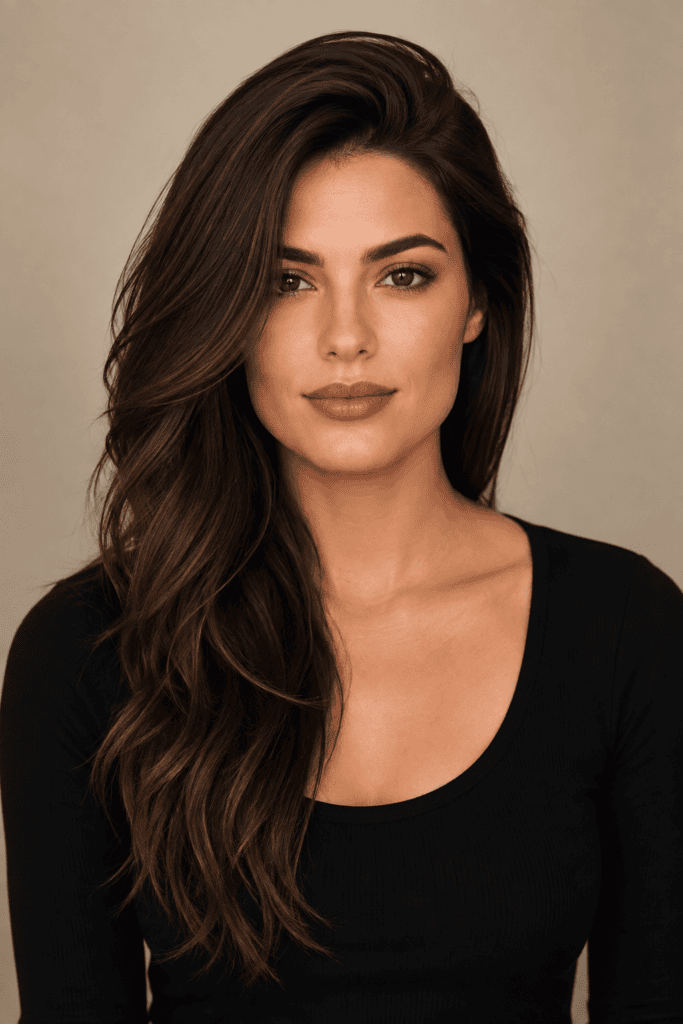
A deep side part throws the face out of perfect symmetry, and that asymmetry works in favor of a square jaw. Symmetrical, center-parted styles emphasize how evenly matched the forehead and jawline are — a deep side part disrupts that balance.
- Volume should build at the crown on the heavier side
- Pair with layers for the most natural-looking effect
- Avoid a razor-straight center part with this face shape when possible
9. Wispy, Textured Pixie Cut
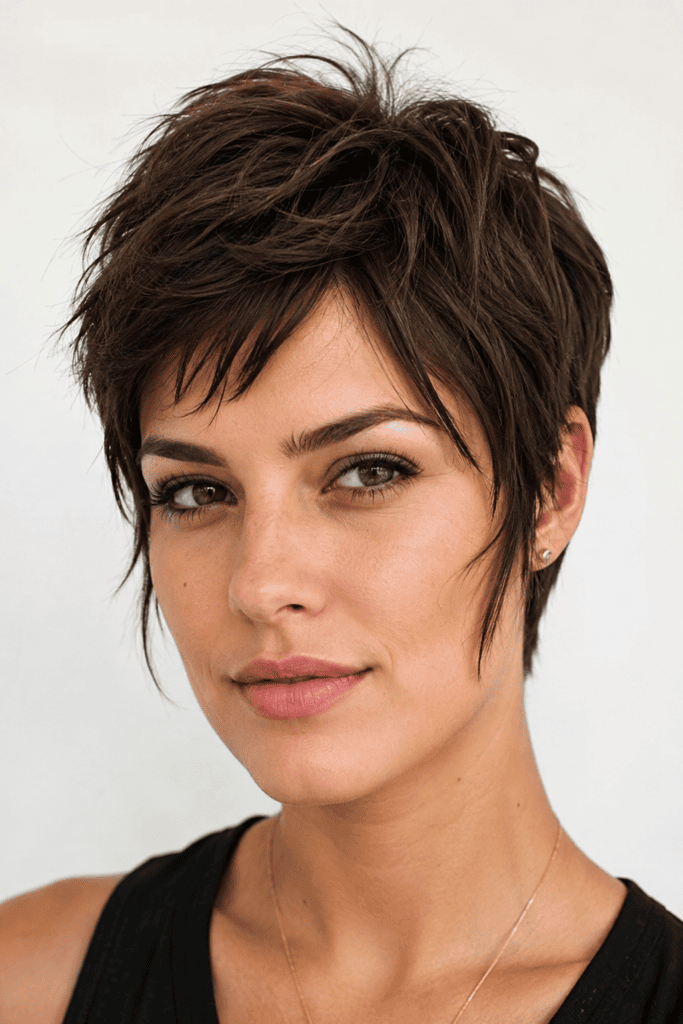
A pixie cut can absolutely work for a square face, but the styling matters more than usual here. A textured pixie with soft, wispy pieces around the face — especially near the temples and jaw — prevents the cut from looking too geometric.
- Ask for texture at the crown for height
- Keep the sides soft rather than tapered flat
- A few longer pieces near the cheek soften the jawline from above
10. Long Layers With a Deep Side Part
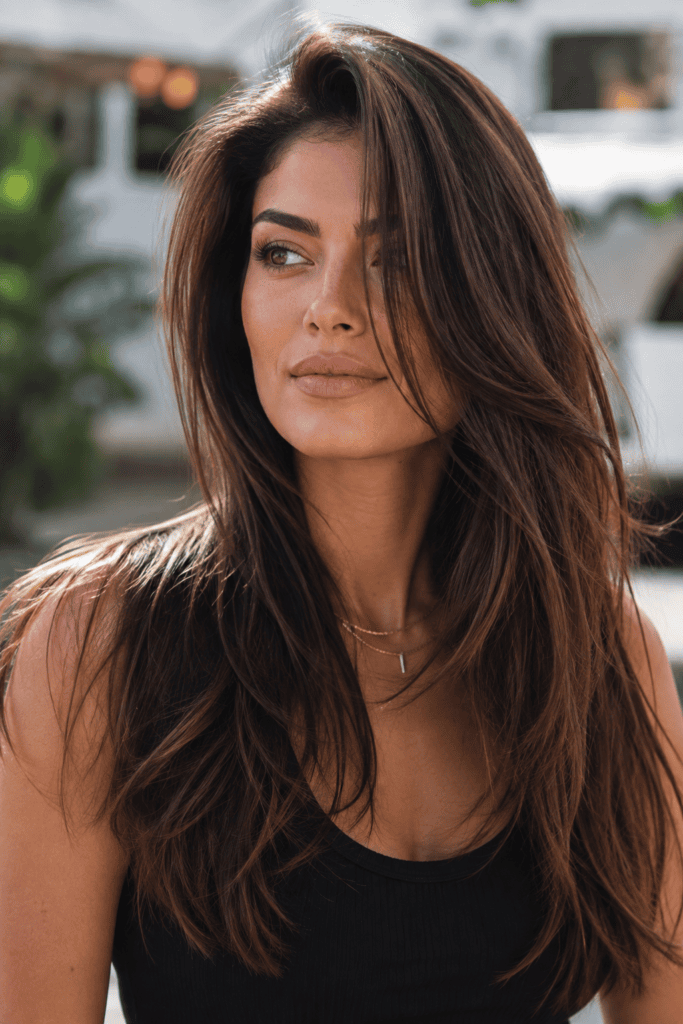
Combining two softening techniques at once — long layers and a deep side part — doubles the effect. This is one of the most forgiving combinations for a square face because it works with almost any hair texture, from straight to wavy to curly.
The layers add movement, the side part adds asymmetry, and together they pull focus away from the jawline entirely.
11. Wolf Cut

The wolf cut blends a shag with mullet-inspired layering, producing heavy texture at the crown and choppier, face-framing pieces lower down. That contrast in layer length creates constant movement around the jaw.
- Best suited to medium or long hair
- Works especially well with naturally wavy or curly texture
- Pair with curtain bangs for a softer front section
12. Face-Framing Highlights
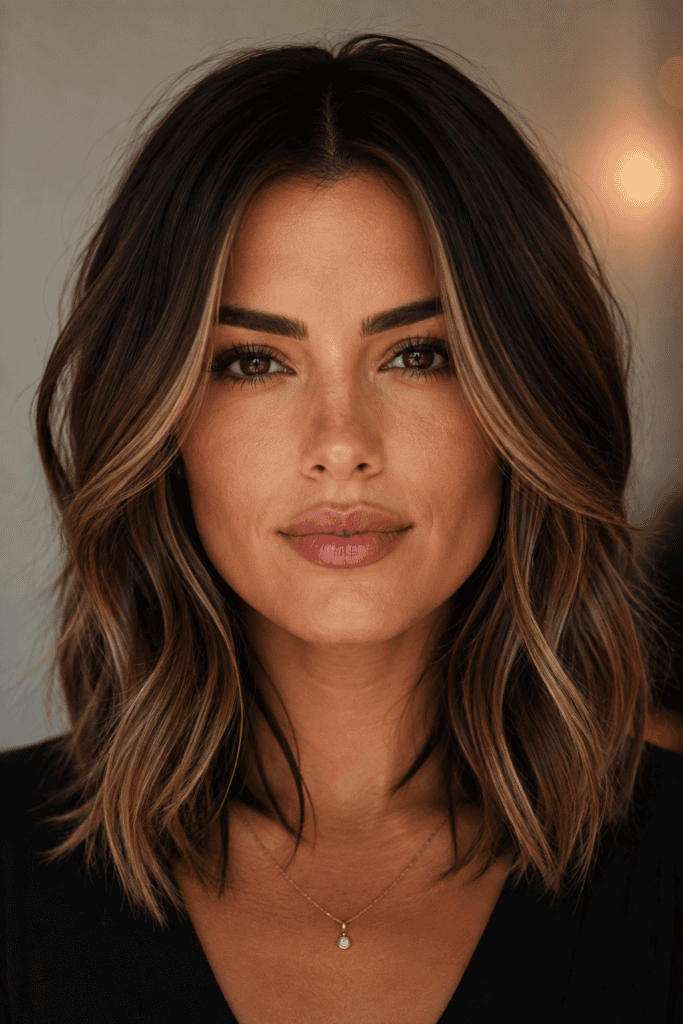
Sometimes the fix isn’t the cut — it’s the color. Face-framing highlights, placed lighter around the front pieces near the jaw and temples, create dimension that visually rounds out sharp angles. Lighter pieces near the jawline draw the eye inward and soften the transition to the neck.
- Balayage-style highlights blend more naturally than solid foils
- Focus lightness around the cheek and jaw, not the crown
- Works with any cut, from a lob to long layers
13. Soft, Rounded Waves at the Ends
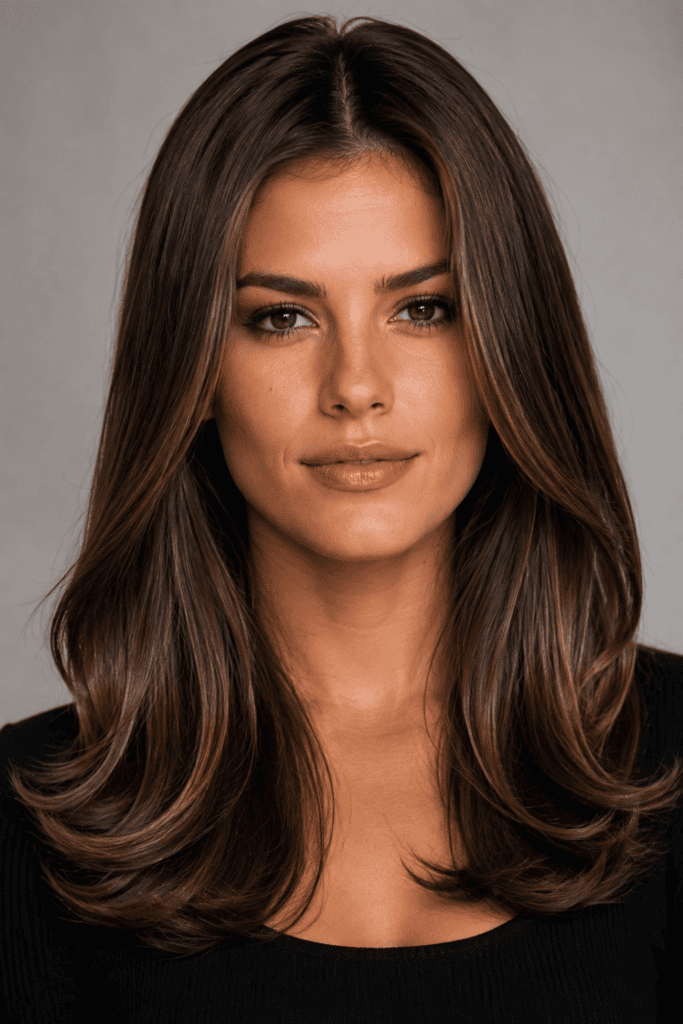
Even without a full haircut change, styling straight hair into soft waves that curve inward at the ends can immediately soften a square jaw. This is one of the lowest-commitment options on this list since it requires styling, not cutting.
- A large-barrel curling iron or wand creates the most natural curve
- Curl ends toward the face, not away from it
- Finish with a light-hold product to keep the shape without stiffness
14. Medium-Length Cut With Face-Framing Layers
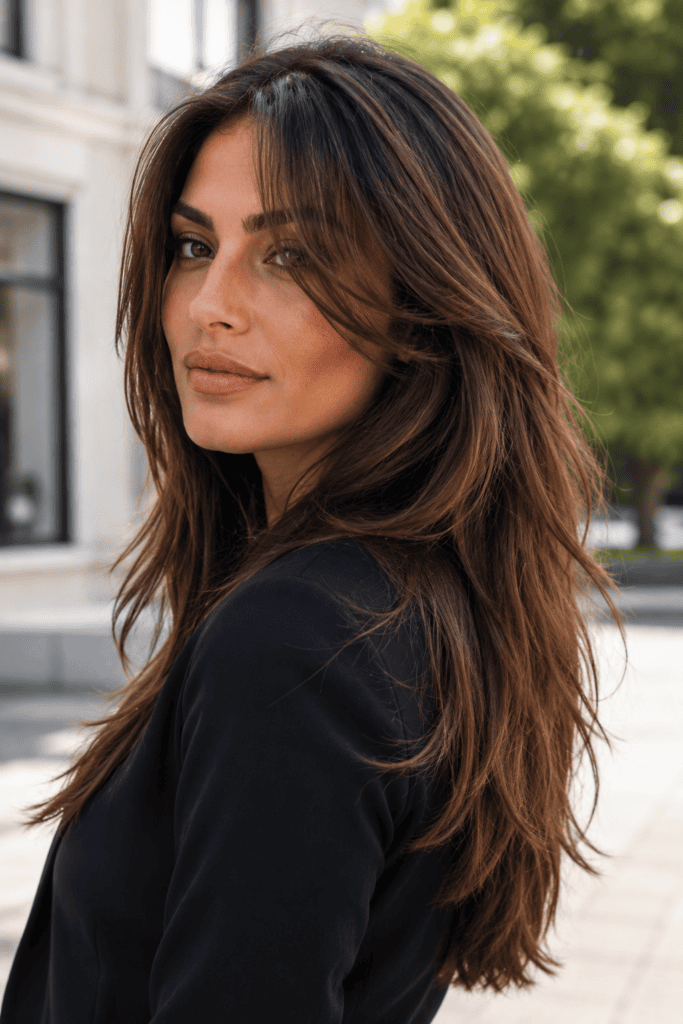
A medium length — landing between the shoulders and mid-back — gives layers enough room to create movement without the weight of very long hair pulling curls or waves flat. Face-framing layers cut here should hit right around the jaw and chin.
This length also works well for anyone who wants the softening benefits of layers but isn’t ready to commit to a shorter cut.
15. Curly Bob
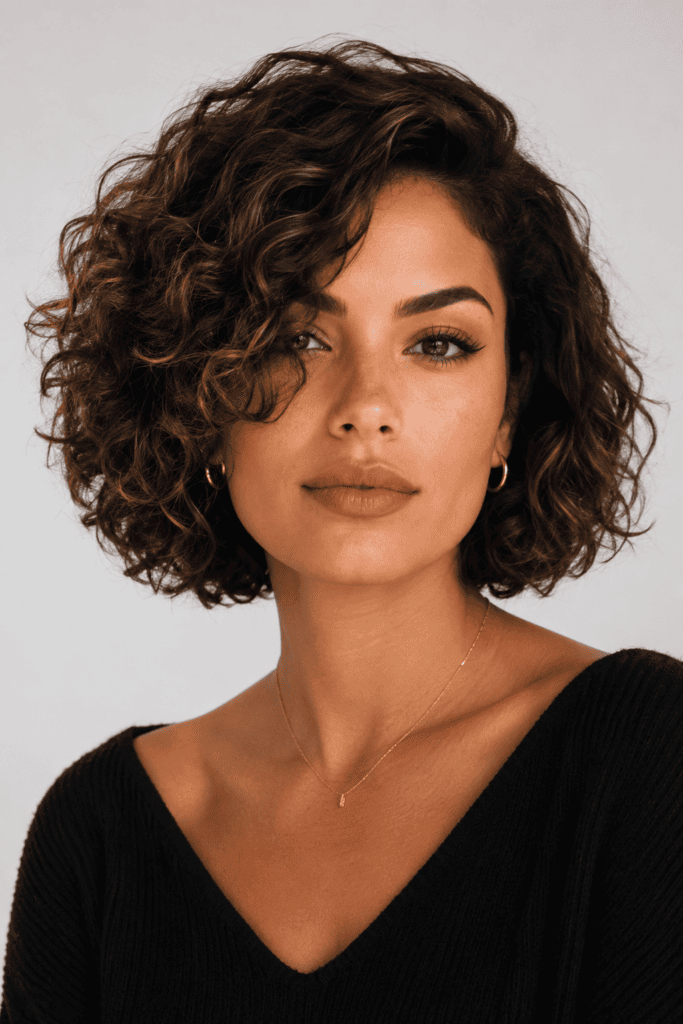
A curly bob combines two softening strategies in one cut: the natural roundness of curls and the shorter length of a bob. The result is a style that curves inward toward the jaw instead of running straight past it.
- Works best with layers cut into the curl pattern
- Avoid a blunt, one-length curly bob, since it can add width at the jaw
- A side part adds an extra layer of asymmetry
Styling Tips That Make Any of These Cuts Work Harder
The right haircut is half the equation. Styling technique fills in the rest:
- Curl or wave ends inward, toward the face, rather than flipping them outward
- Add volume at the crown, not at the jawline, to balance proportions
- Use a deep side part instead of a center part whenever possible
- Ask for face-framing layers that hit at or just below the jaw, never above it
- Avoid one-length, blunt cuts that sit exactly at jaw level
Final Takeaways
A square face shape doesn’t need to be hidden — it needs softening in the right places. Layers, waves, curtain bangs, and asymmetrical parts all work by adding curve and movement near the jaw, which shifts the overall impression from angular to balanced. Any of the 15 styles above can be adapted to different hair textures and lengths, so the best approach is picking the version that fits current hair length and maintenance preferences, then asking a stylist to focus the layering and framing specifically around the jaw and temples.