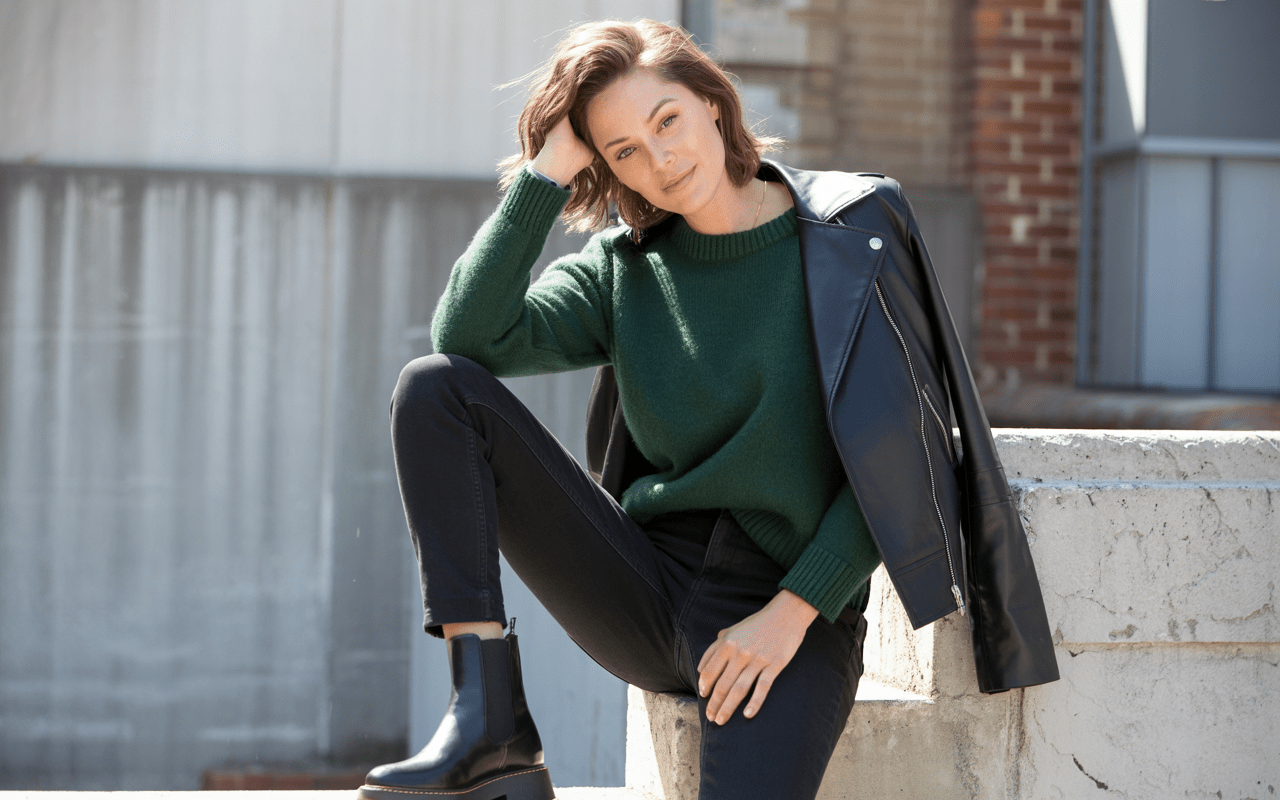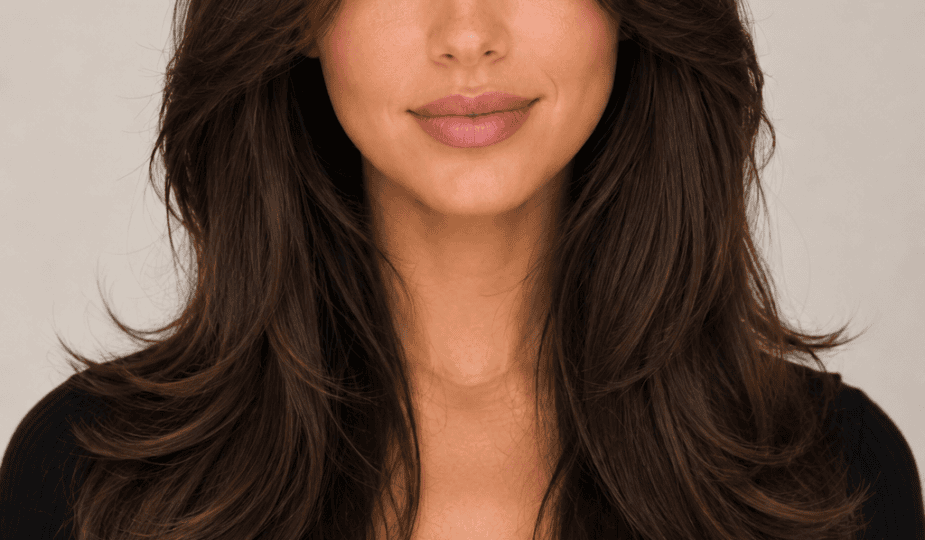
A heart-shaped face is defined by a wider forehead, high cheekbones, and a narrow, often pointed chin. It’s one of the most common face shapes, and it’s also one of the most misunderstood when it comes to haircuts — many people assume they need to hide their forehead or chin entirely, when the real goal is much simpler: soften the width at the top and add subtle volume or width near the jaw and chin to create balance. The right cut doesn’t fight the face shape — it works with it.
This applies to short cuts, long cuts, curly textures, and straight textures alike. The common thread across every flattering style is where the volume sits, not how long the hair is. A pixie cut and a waist-length style can both work for a heart-shaped face, as long as the fullness is placed correctly.
Below are 16 hairstyles that flatter a heart-shaped face, along with why each one works, who it suits best, and how to ask for it at the salon.
1. Chin-Length Bob

A chin-length bob is one of the most reliable cuts for a heart-shaped face because it lands right at the narrowest point of the face — the chin — and adds visual width exactly where it’s needed. The hair itself acts like a frame, filling out the lower half of the face so the proportions between forehead, cheekbones, and jaw look more even.
- Works best with a slight outward flip at the ends, which physically adds width at jaw level
- Avoid cutting it too blunt with heavy inward curl, which can emphasize a pointed chin instead of softening it
- Pairs well with side-swept bangs to soften a wide forehead
- Suits straight to slightly wavy textures best, since curly hair at this length can shrink upward and lose the width effect
2. Long Layers Starting at the Cheekbone
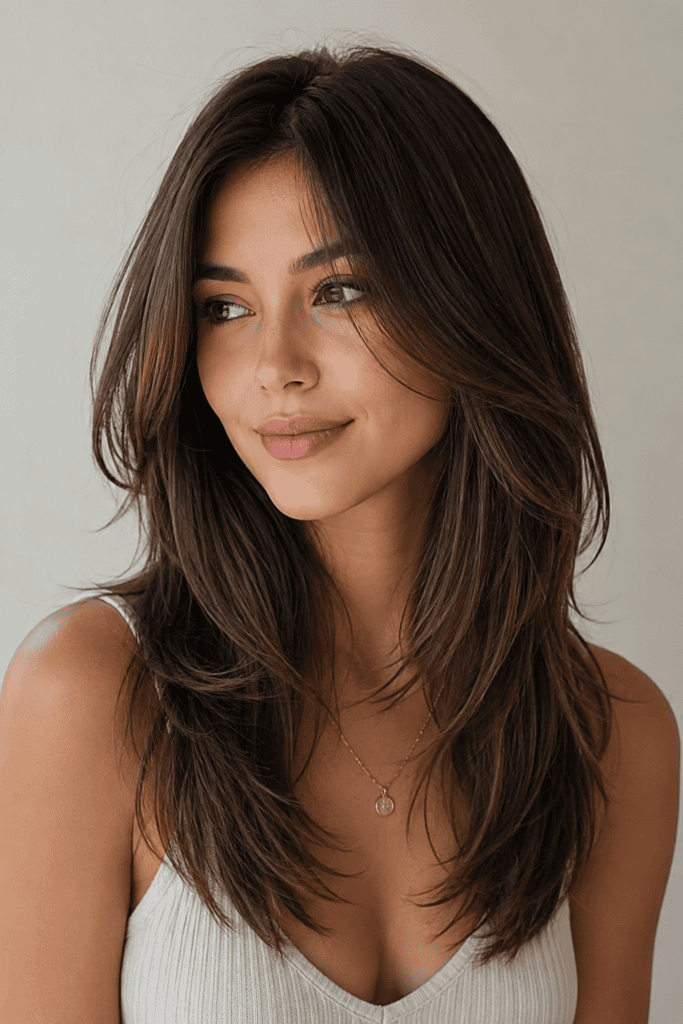
Layers that begin at cheekbone level draw attention away from the forehead and add fullness around the jaw. This style keeps length while still balancing proportions, which makes it a good option for anyone who doesn’t want to commit to a shorter cut.
- Best for fine to medium hair texture, since heavier hair can pull layers flat and reduce the width effect
- Face-framing layers should hit between the chin and collarbone
- Blunt ends underneath keep the bottom half looking fuller
- A round brush blowout adds extra lift right at the jawline, reinforcing the balance the cut is designed to create
3. Side-Swept Bangs
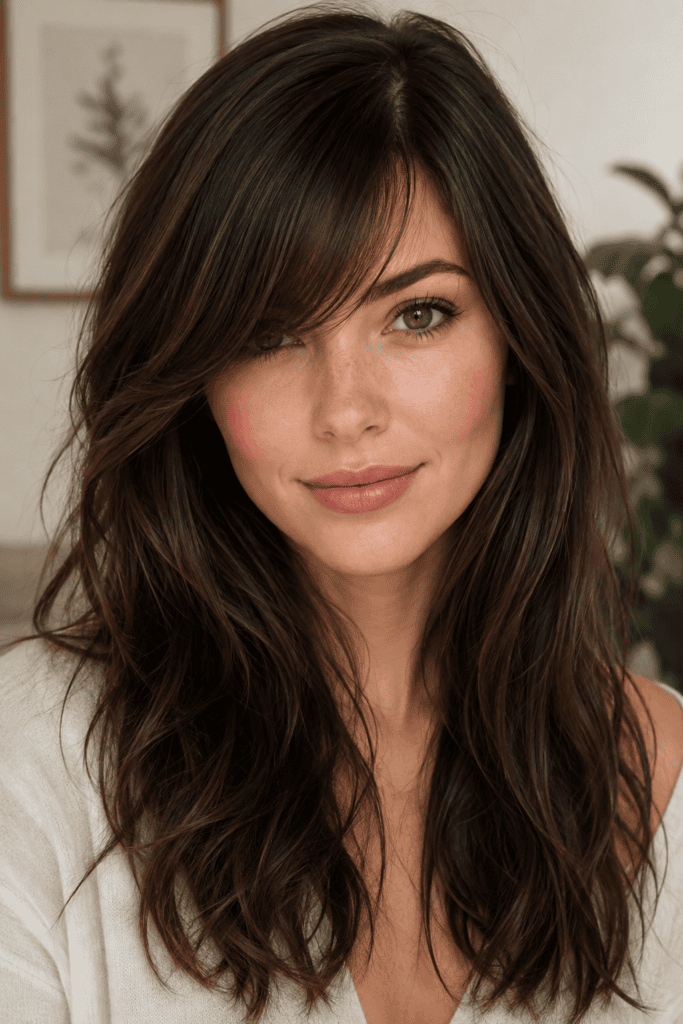
Side-swept bangs are a go-to for heart-shaped faces because they break up forehead width without adding bulk at the top of the head. The diagonal line they create draws the eye across the face rather than straight up, which is exactly the effect needed to minimize a wide hairline.
- Choose a deep side part for maximum forehead coverage
- Avoid full, blunt fringes, which tend to widen the upper face further
- Works on both short and long hairstyles
- Low-maintenance to grow out, since the angle blends naturally into longer layers over time
4. Wispy Curtain Bangs
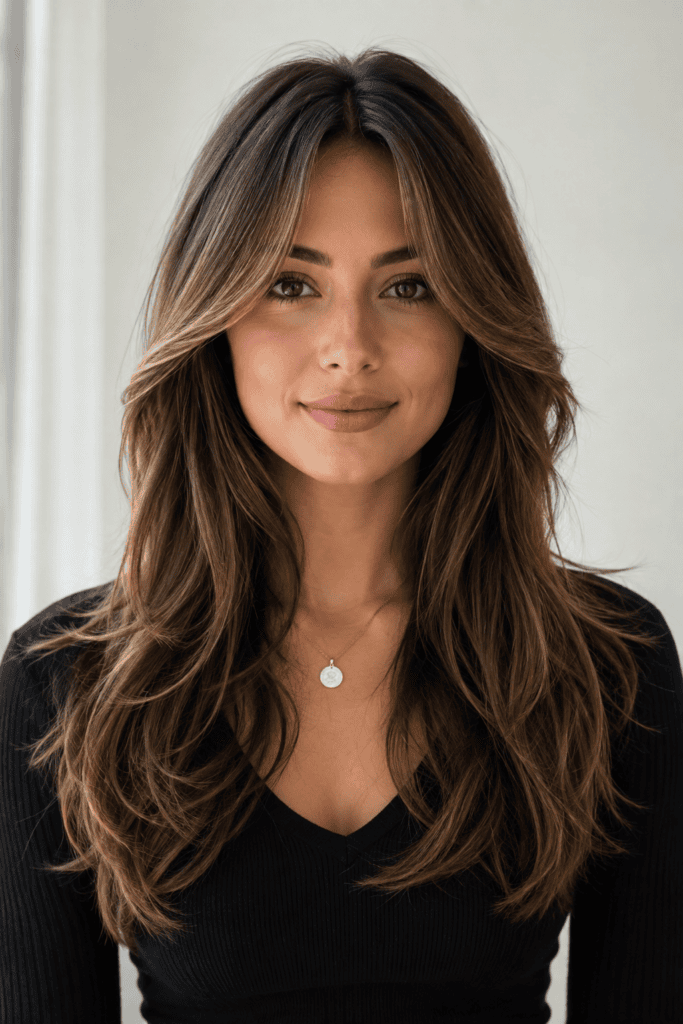
Curtain bangs part in the center and frame both sides of the face, softening a wide hairline while still showing some forehead. Unlike a full fringe, they taper outward toward the cheekbones, which rounds out sharp upper-face angles rather than boxing them in.
- Best kept light and feathered rather than thick
- Complements angular cheekbones by rounding out the upper face
- A low-maintenance option that grows out easily into face-framing layers
- Works well on both curly and straight textures, though curly curtain bangs need regular trims to keep the shape defined
5. Shoulder-Length Waves
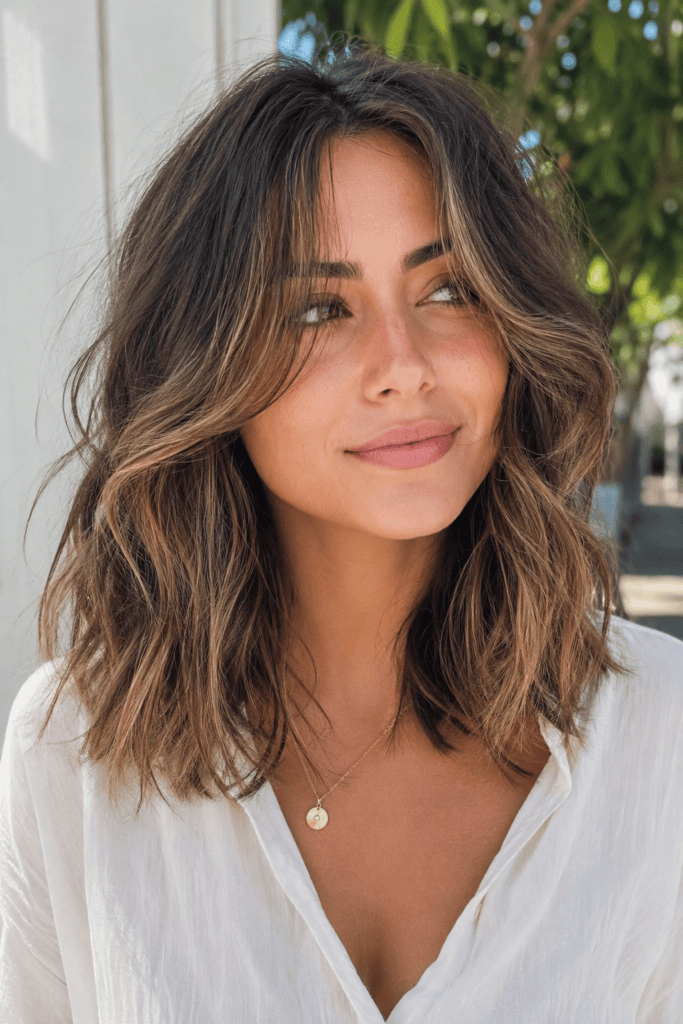
Loose waves at shoulder length add movement and width at the jaw and neck, balancing a narrow chin. Because waves create irregular width along the length of the hair rather than a single straight edge, they tend to look natural rather than deliberately “corrective.”
- Beachy or tousled waves work better than sleek, straight styles
- A texturizing spray helps hold volume through the day
- Avoid pulling all the wave pattern up near the roots, which adds unwanted height at the crown
- A curling wand with a 1-inch barrel typically produces the loosest, most natural-looking wave pattern for this length
6. Long Bob (Lob) with Layers

The lob is a middle ground between short and long styles, and when layered correctly, it hits at the perfect width-adding point along the jaw and chin. It’s also one of the more versatile options on this list, since it can be styled sleek for a polished look or tousled for something more casual, without losing the balancing effect.
- Ask for layers that start no higher than the cheekbone
- A slight outward bend at the ends adds fullness at the jawline
- Works well with both straight and wavy textures
- A lightweight mousse at the roots keeps volume from collapsing by midday
7. Soft Fringe with Layers
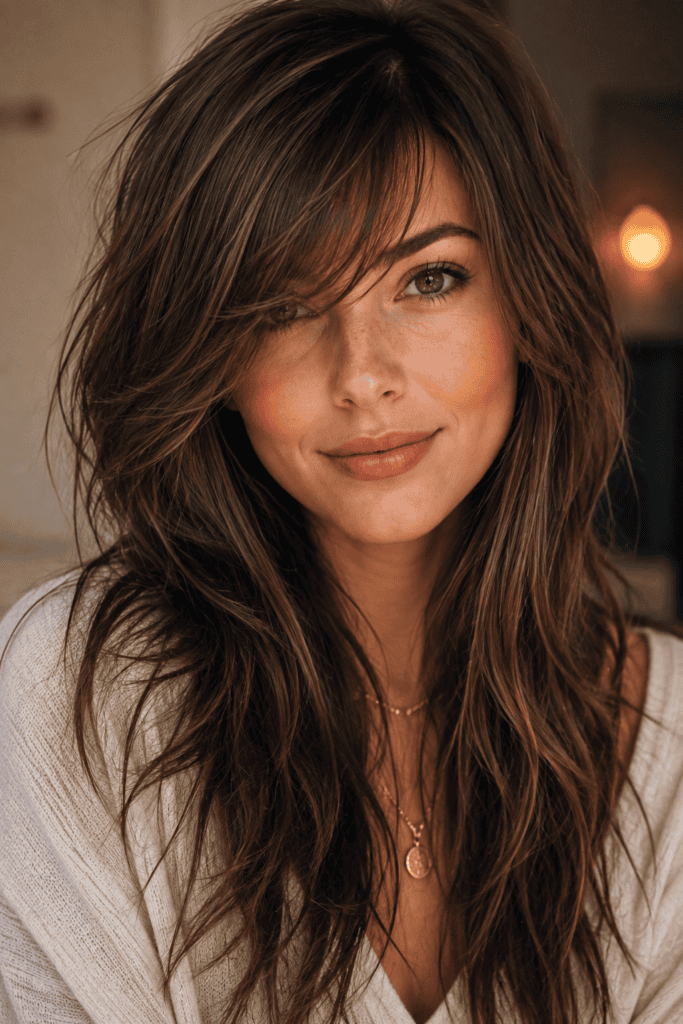
A soft, layered fringe — rather than a single blunt line — breaks up forehead width gradually instead of creating a hard horizontal edge. The gradual, feathered edge reads as more natural and is generally more forgiving as it grows out, compared to a single hard line.
- Works with both straight-across and side-swept placement
- Keep the ends piece-y rather than uniform
- Pairs naturally with longer layers through the rest of the hair
- A flat iron with a slight outward flick at the tips keeps the fringe from looking flat against the forehead
8. Chin-Grazing Pixie Cut
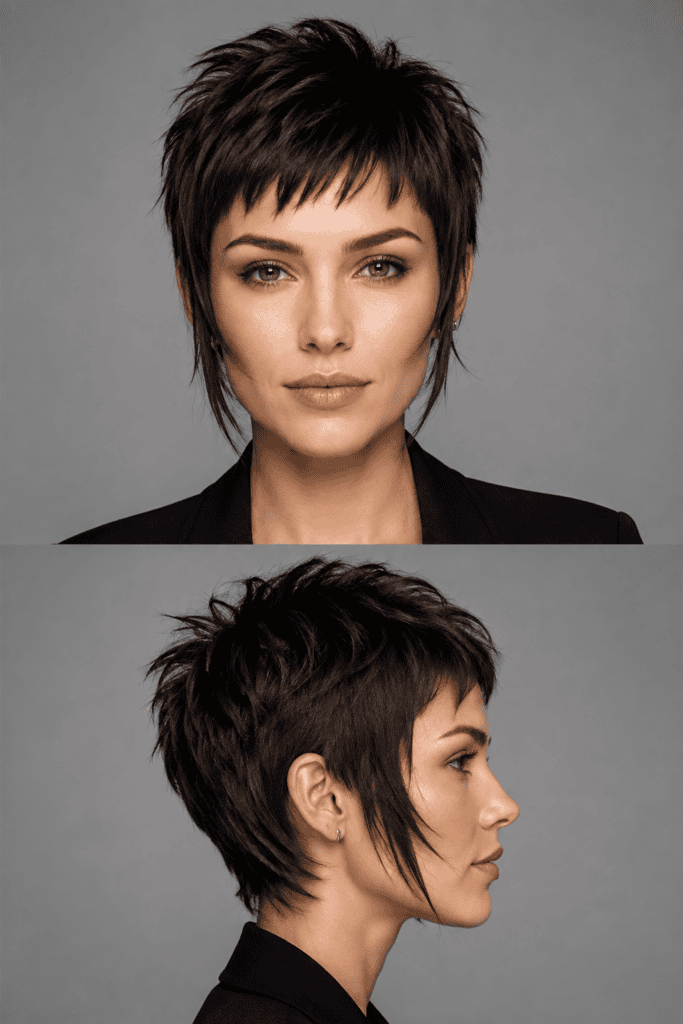
A pixie cut can absolutely work on a heart-shaped face, provided it includes some length and texture at the jawline rather than being cropped uniformly short all over. A common mistake with this cut is going shorter everywhere, which removes the very width that a heart-shaped face needs at the bottom.
- Longer pieces near the cheeks and chin add width where it’s needed
- Avoid very short, tapered sides, which can expose more forehead
- Add texture at the crown to avoid excess height
- A matte styling paste, rather than a shine-heavy product, keeps the cut looking textured instead of flat
9. Center-Parted Long Hair
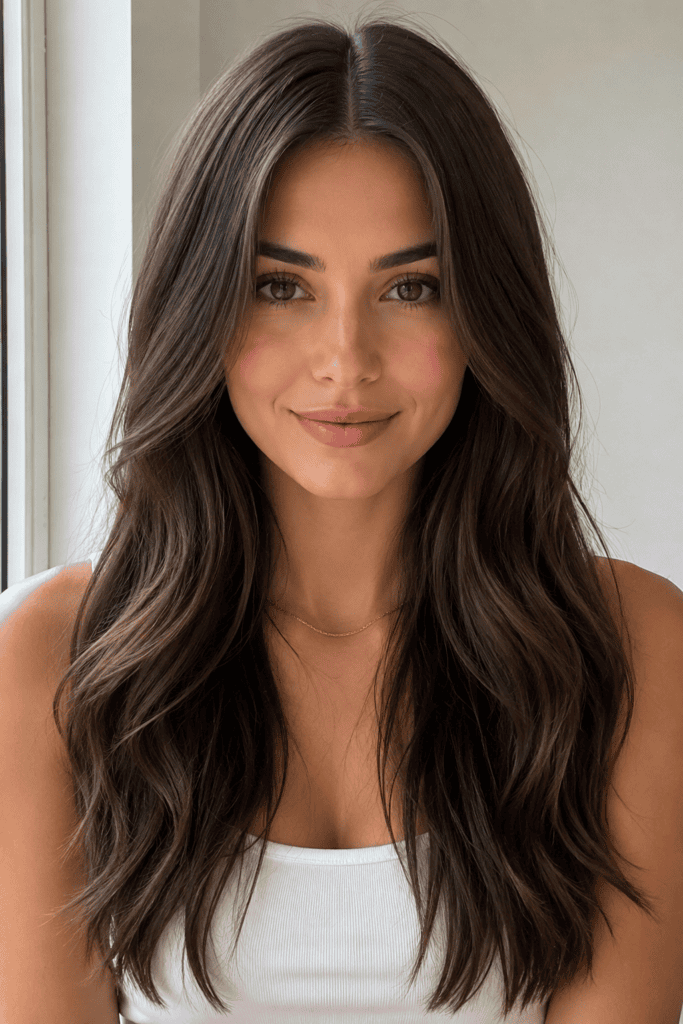
A center part visually shortens forehead width by creating two symmetrical vertical lines instead of one horizontal expanse. This is a simple styling change rather than a haircut, which makes it one of the easiest adjustments to test before committing to anything more permanent.
- Works especially well on longer hair past the shoulders
- Pairs naturally with waves or loose curls for added dimension
- Best avoided on very fine hair without added texture, since a flat center part can look thin
- A root-lifting spray at the parting helps prevent the scalp from showing through
10. Textured Shag

The shag haircut uses heavy layering throughout to break up proportions and add volume in multiple places at once, rather than just at the jaw. Because the layering is distributed across the whole head instead of concentrated in one spot, it tends to suit faces with more dramatic width-to-chin ratios particularly well.
- Face-framing layers should start around cheekbone height
- Works well with a curtain fringe for added forehead coverage
- Best styled with a rough, undone texture rather than sleek and smooth
- A sea salt spray enhances the “lived-in” texture this cut is built around
11. Angled Bob (A-Line Bob)
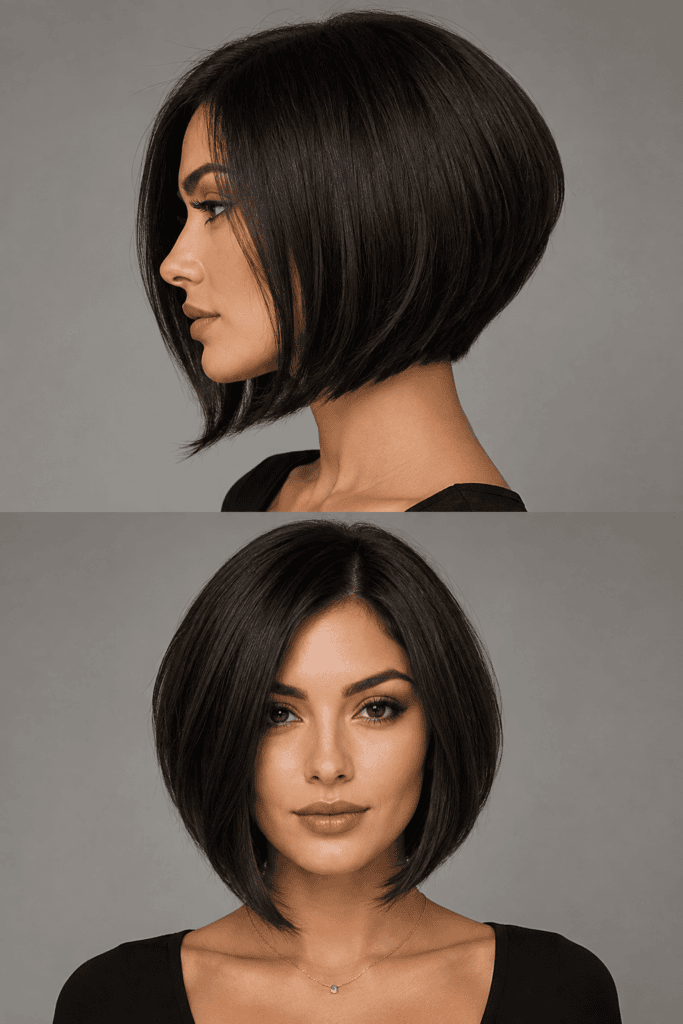
An angled bob, shorter in the back and longer toward the chin and jaw, adds width exactly at the narrowest part of a heart-shaped face while keeping the back of the head from looking bulky. The graduated shape directs visual attention downward and outward toward the jaw rather than up toward the crown.
- The longest point should land at or just past the chin
- Works well with subtle inward or outward bends at the ends
- A versatile option for fine to medium-thick hair
- Blow-drying with a paddle brush, pulling the ends slightly outward, reinforces the width the cut is designed to create
12. Long Hair with Face-Framing Layers
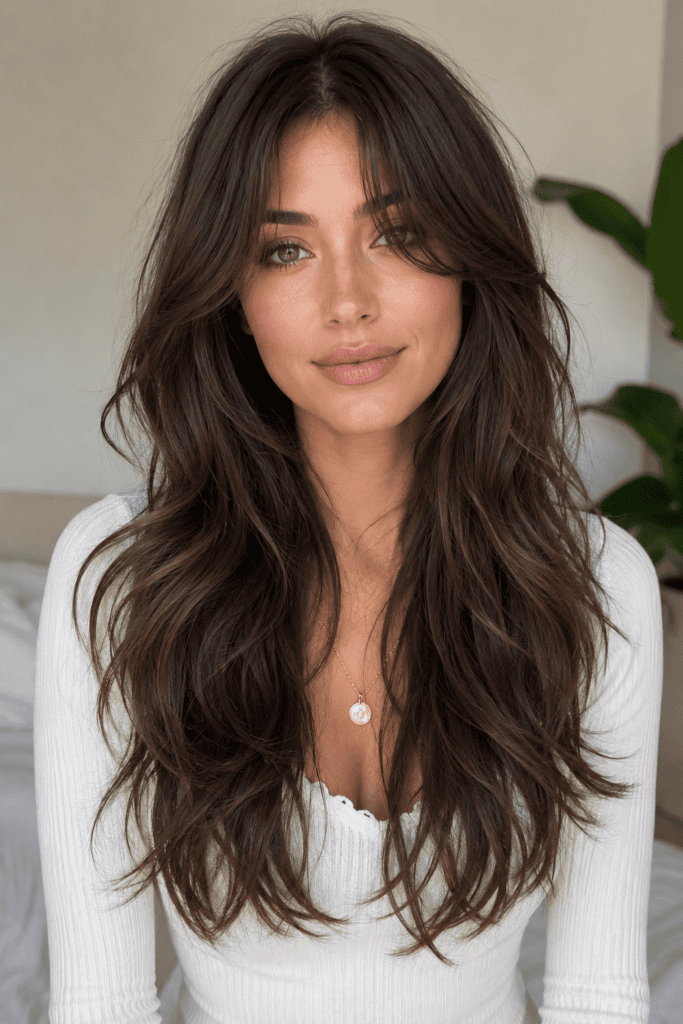
Keeping length while adding strategic layers around the face is one of the most flexible options, since it allows for volume control at the jaw without a full haircut. This makes it a practical choice for anyone who has invested time growing hair out and doesn’t want to lose length for the sake of face shape.
- Layers should start at cheekbone level, not higher
- Avoid heavy layering at the crown, which adds unwanted width up top
- Waves or loose curls enhance the width-adding effect at the jaw
- A weekly deep conditioning treatment helps keep long layered ends looking healthy rather than thin
13. Blunt Lob with Rounded Ends
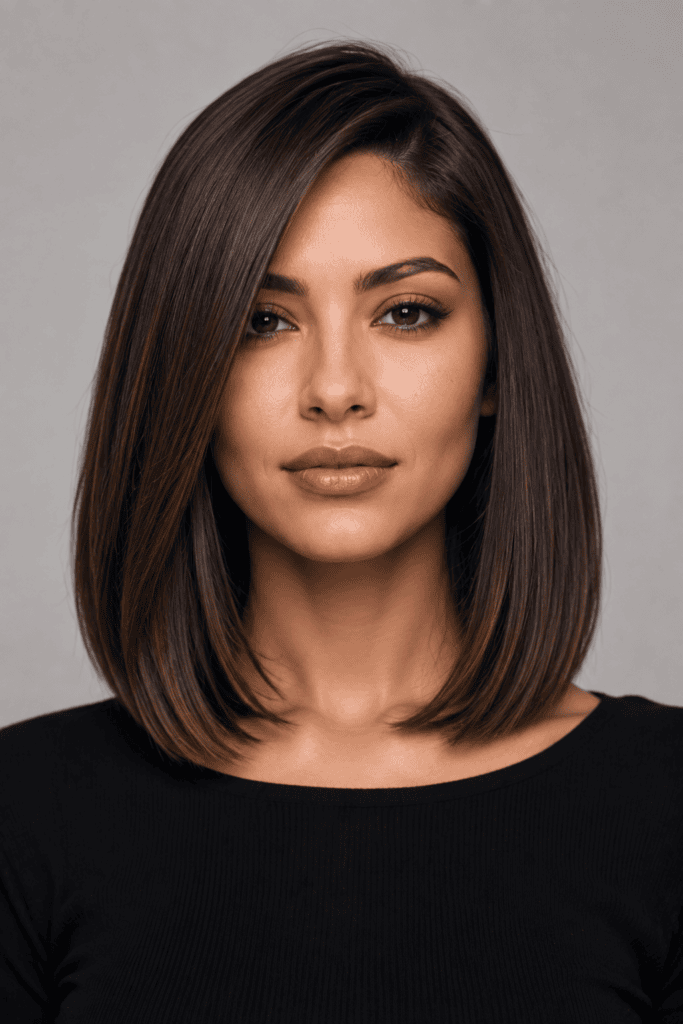
A blunt cut at lob length, with ends rounded rather than sharply straight, adds a soft weight line right at jaw level. The rounded finish keeps the density of a blunt cut while avoiding the harsh, geometric edge that can draw unwanted attention to a narrow chin.
- Best for thicker or medium-density hair
- Avoid a razor-sharp blunt edge, which can look severe against a pointed chin
- Pairs well with a soft side part
- Works particularly well straightened, since the weight and density read most clearly on smooth hair
14. Voluminous Curls
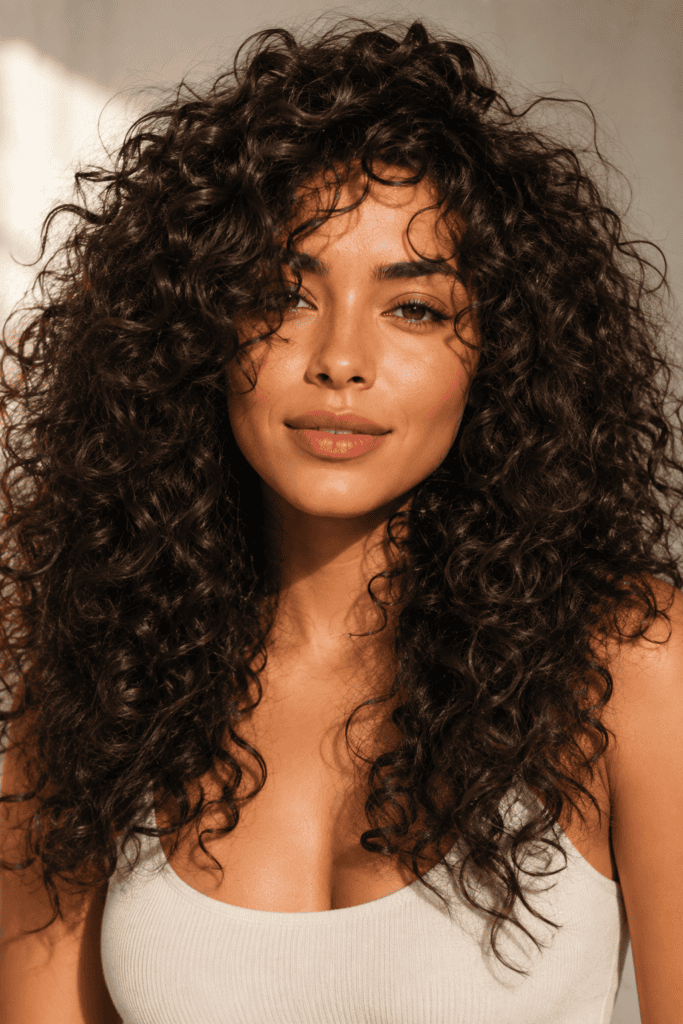
Curls — whether natural or styled — add width and movement at the mid-lengths and ends, which naturally balances a narrower jaw and chin. Because curls expand outward rather than lying flat, they add width more efficiently than almost any other texture, particularly at longer lengths.
- Diffusing curls rather than straightening them preserves volume where it’s needed
- Avoid pulling curls too tightly away from the face at the roots
- A lightweight curl cream helps define shape without weighing hair down
- Scrunching product in from the ends upward, rather than brushing curls out once dry, keeps the shape intact and avoids frizz
15. Layered Cut with Volume at the Crown Kept Minimal
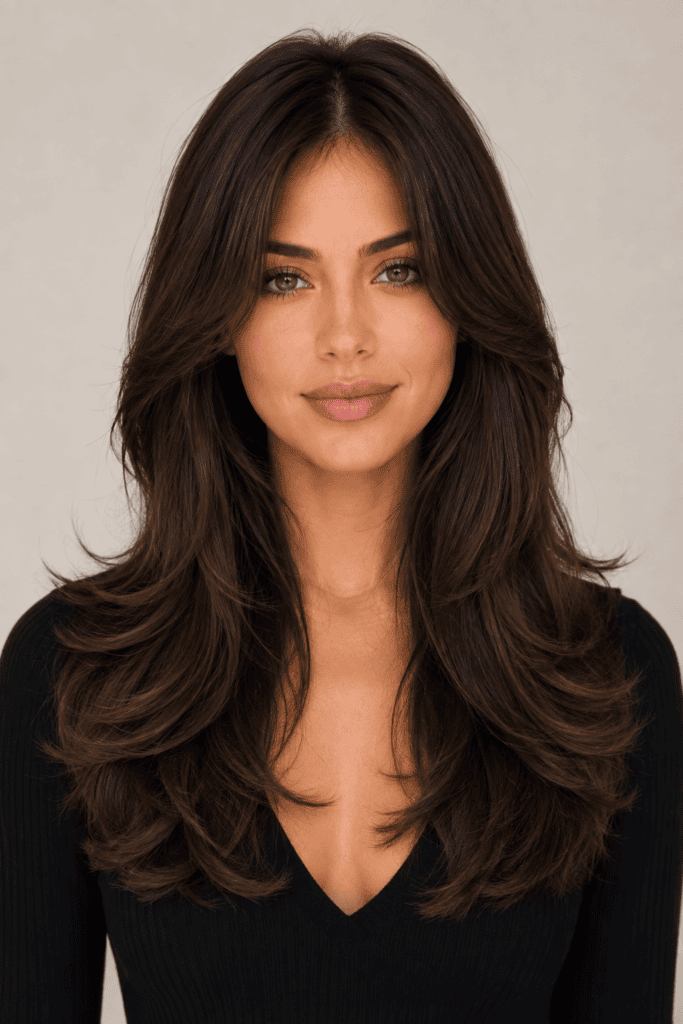
For heart-shaped faces, the goal is volume lower on the head, not higher. A layered cut that intentionally keeps the crown flatter while building fullness from the cheekbone down helps maintain proportion — this is essentially the opposite of the volume placement recommended for a rounder or heart-shaped-in-reverse face.
- Ask a stylist specifically to avoid heavy layering at the top of the head
- Works with most lengths, from shoulder-length to long
- A flat iron with a slight bend at the ends reinforces the lower-volume placement
- Avoid teasing or backcombing at the crown, since this directly works against the balancing goal of the cut
16. Asymmetrical Bob
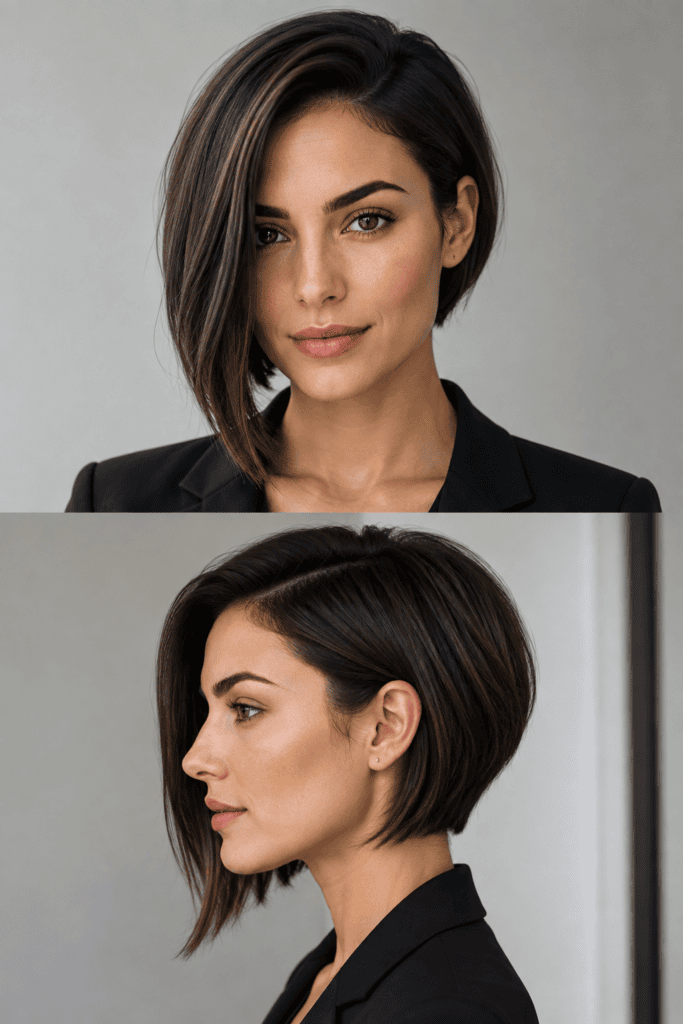
An asymmetrical bob, with one side slightly longer than the other, adds visual interest and breaks up facial symmetry in a way that de-emphasizes a pointed chin. Because the eye is drawn to the uneven line rather than the shape of the jaw itself, this cut works as a distraction technique as much as a balancing one.
- The shorter side typically sits at jaw length, the longer side just below it
- Works well with a deep side part for additional forehead balance
- Best suited to those comfortable with a slightly edgier, modern look
- Requires more frequent trims than a symmetrical bob to keep the length difference intentional rather than uneven
Frequently Asked Questions
Do bangs work for a heart-shaped face? Yes, provided they are side-swept, curtain-style, or softly layered rather than a full, blunt fringe. A heavy blunt fringe adds width right at forehead level, which works against the balance a heart-shaped face needs.
Is a center part or side part better? A center part generally works better for reducing the appearance of forehead width. A deep side part is the second-best option and pairs especially well with side-swept bangs.
Should hair be kept long or short? Neither length is inherently better. What matters is where the volume sits — cuts that add width at the jaw and chin work at any length, from a textured pixie to waist-length layers.
What should be avoided? Heavy volume at the crown, blunt full fringes, and very short, tapered styles that expose more forehead all tend to work against a heart-shaped face rather than for it.
How to Choose the Right Cut for Your Face
A few general rules apply across all 16 styles above:
- Add width at the chin and jaw rather than at the forehead or crown
- Use bangs or fringe to reduce visible forehead width, choosing side-swept or curtain styles over blunt, full fringes
- Avoid excessive height at the crown, since this exaggerates the width-to-chin taper that defines a heart shape
- Layers should start at or below cheekbone level, not higher on the head
- Texture and waves help more than sleek, straight styles, since movement adds the illusion of width lower on the face
Final Takeaway
Every one of these 16 hairstyles works by applying the same core principle: reduce visual weight at the forehead and add it back at the jaw and chin. Whether the choice is a short pixie with length at the jaw, a soft curtain fringe, or long layers starting at the cheekbones, the right cut for a heart-shaped face comes down to where the volume sits — not the length of the hair itself.