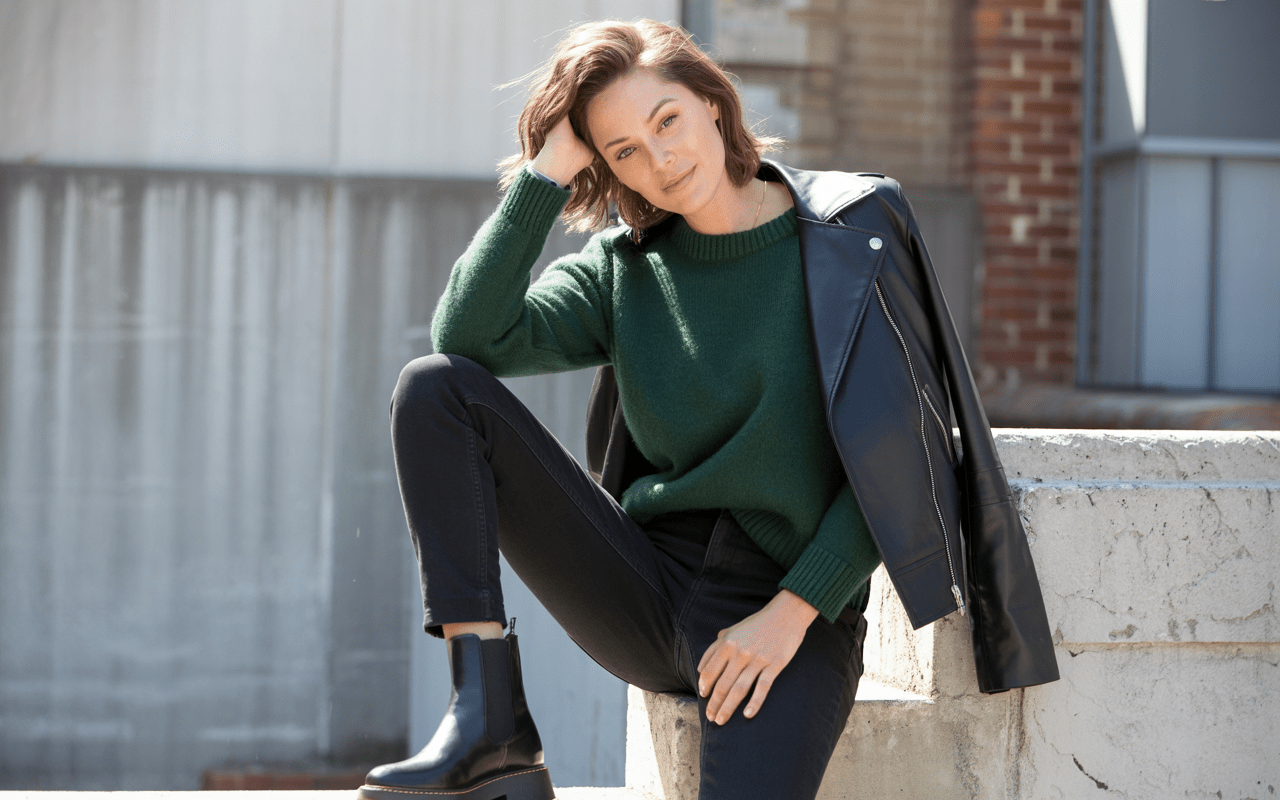
A round face shape is defined by soft curves, a rounded jawline, and width and length measurements that are nearly equal. Unlike oval or square face shapes, round faces don’t have strong angles to work with naturally, which means the right haircut can make a dramatic difference in how the face is perceived in photos and in person.
The goal of styling for a round face isn’t to disguise it — it’s to use layering, parting, volume placement, and length to create the illusion of added definition and elongation. Below are 17 hairstyles that do exactly that, along with the specific technical reasons each one works.
How to Identify a Round Face Shape
Before choosing a hairstyle, it helps to confirm the face shape accurately, since round and oval faces are sometimes confused. A round face typically has the following characteristics:
- Width and length are close to equal, with minimal difference between the two measurements
- The jawline is soft and curved, without a defined angle at the chin
- Cheekbones are the widest point, often the same width as the forehead
- The chin is rounded rather than pointed or square
An oval face, by contrast, is longer than it is wide and has a slightly narrower jaw and forehead relative to the cheekbones. Confirming a round shape before selecting a style ensures the recommendations below will have the intended effect.
Why Certain Cuts Work Better for Round Faces
Round faces benefit most from styles that introduce vertical lines and asymmetry, since these break up the natural circular symmetry of the face. Horizontal lines — like blunt bangs or jaw-length blunt bobs — tend to emphasize width, while diagonal or vertical lines draw the eye up and down instead of side to side.
Volume placement matters just as much as length. Height at the crown stretches the face vertically, while volume at the sides (like tight curls or a rounded bob shape) adds width exactly where a round face doesn’t need it. Keeping this principle in mind makes it easier to understand why each of the following styles is recommended.
Hair texture also plays a role in how each style performs. Fine, straight hair tends to fall flat at the crown and may require additional volumizing products to maintain height, while thick or coarse hair holds volume more easily but may need more frequent layering to prevent bulk from forming at the sides. Curly and wavy textures naturally add width, which is why looser, more elongated curl patterns are generally recommended over tight, uniform curls for round face shapes.
1. The Long Layered Cut

Long layers starting below the chin or at the collarbone create continuous vertical lines running down the length of the hair. This is one of the most universally flattering options for round faces because it avoids adding width at any single point.
Layers that start higher, closer to the cheekbone, can shorten the visual line and should generally be avoided. The longer the layers extend past the jaw, the more elongating the effect becomes.
2. The Side-Swept Fringe
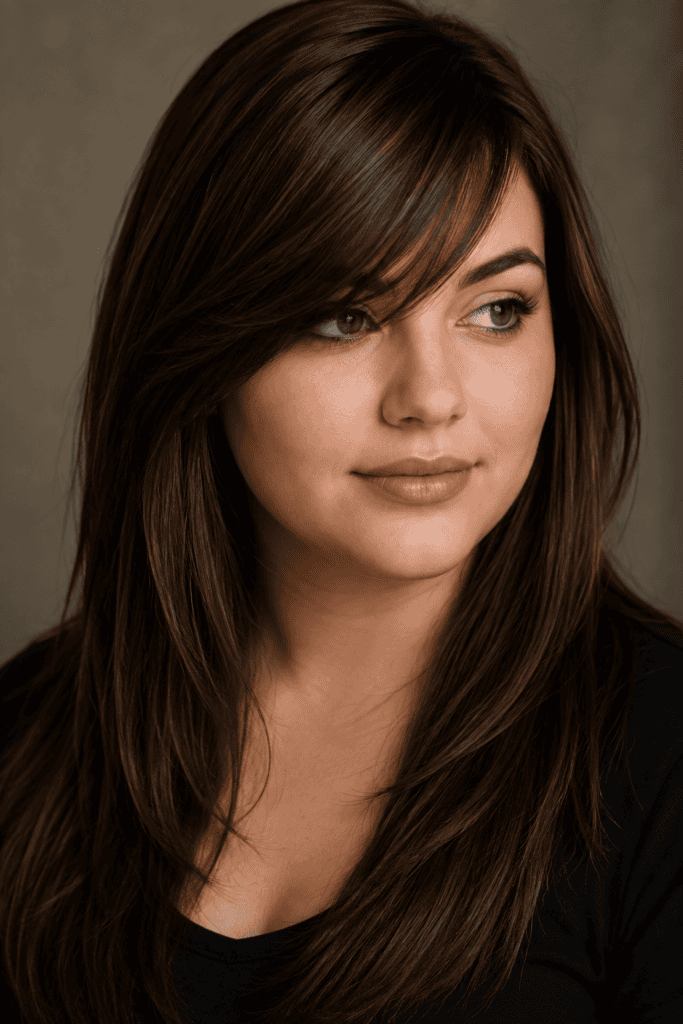
A side-swept fringe creates a diagonal line across the forehead, which slims the upper portion of the face. This is a notable contrast to a blunt, straight-across fringe, which creates a horizontal line that emphasizes width right above the eyes.
Side-swept bangs work with most hair textures and lengths, making this one of the easiest changes to make without committing to a full haircut.
3. The High Ponytail
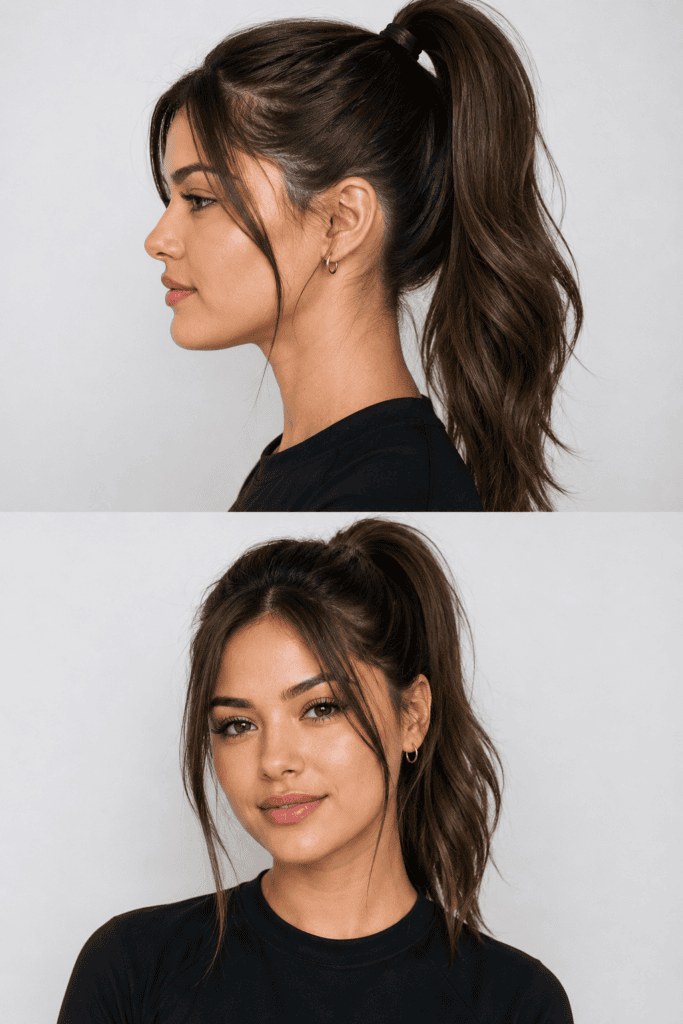
A high, sleek ponytail pulls the hair away from the sides of the face and elongates both the neck and the face simultaneously. Positioning the ponytail slightly off-center, rather than dead-center, adds a subtle asymmetry that further enhances the elongating effect.
Leaving a few face-framing pieces loose softens the overall look, while a fully slicked-back version creates a sharper, more defined silhouette. A ponytail pulled too tightly at the crown should be avoided, as it can pull attention toward the roundest part of the face.
4. The Deep Side Part
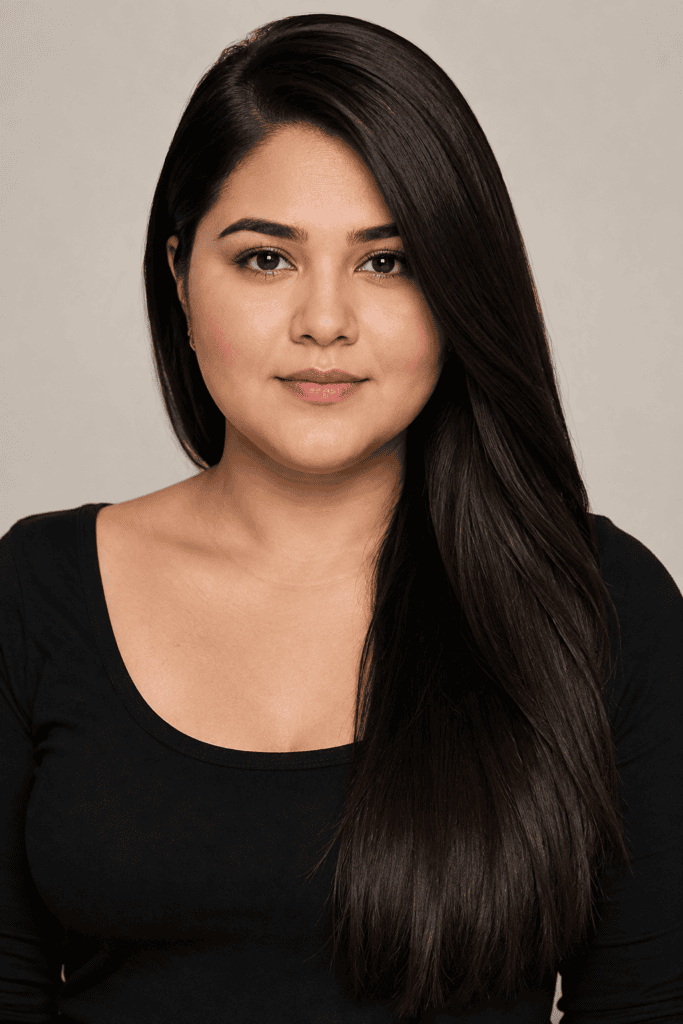
A deep side part breaks the natural symmetry of a round face by introducing an asymmetrical line from the crown downward. This simple adjustment requires no cutting or styling tools and can be paired with virtually any length or texture.
Switching to whichever side feels less habitual often produces a more noticeable change, since most people default to a centered or barely-off-center part without realizing it.
5. The Textured Lob (Long Bob)

A classic, jaw-length bob tends to widen a round face because it ends at the widest point of the jawline. A textured lob that falls below the chin, combined with choppy, razor-cut ends, avoids this issue entirely.
- Razor-cut ends instead of blunt-cut ends
- Layers starting mid-length, not at the jaw
- Face-framing pieces positioned around the cheekbones
This combination keeps the length flattering while still offering the lower-maintenance appeal of a bob-length cut.
6. Long Curtain Bangs
Curtain bangs, parted down the center and swept to either side, create two diagonal lines framing the face. This visually narrows the width of the face while still allowing length to remain around the cheeks and jaw.
Unlike a full, blunt fringe, curtain bangs blend into the rest of the hair, which makes them a lower-maintenance option that still delivers the same slimming effect.
7. The Angled Bob (A-Line Bob)
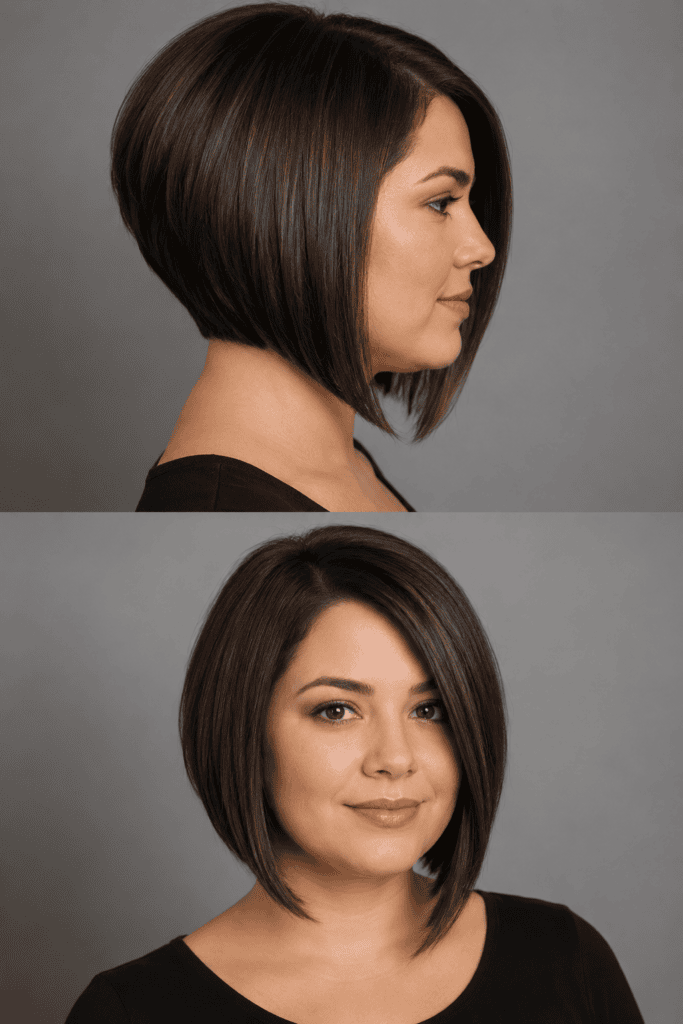
An A-line bob is shorter in the back and gradually lengthens toward the chin, creating a diagonal line rather than a single horizontal one. This diagonal draws the eye downward and adds the illusion of length precisely where round faces benefit from it most.
This style offers a middle ground for those who want short hair without the width that a one-length bob can introduce.
8. Face-Framing Layers with Crown Volume
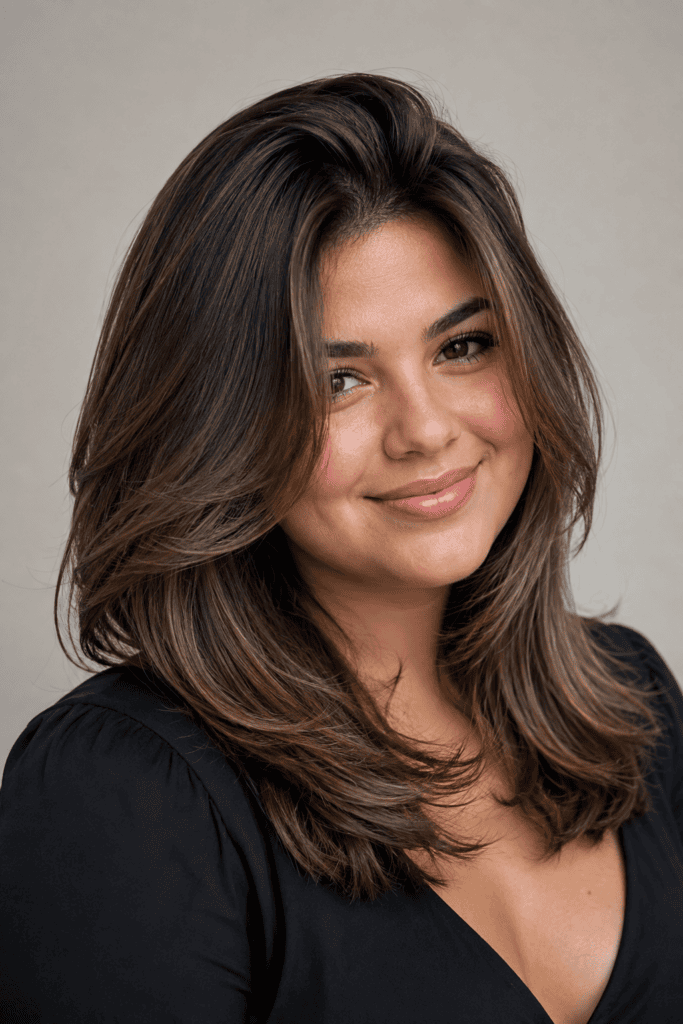
Combining height at the crown with soft, face-framing layers stretches the vertical proportions of the face while narrowing the sides. This combination is achieved through blow-drying technique as much as the haircut itself.
- Blow-dry the roots upward using a round brush
- Keep mid-lengths smooth and controlled
- Apply a lightweight texturizing product rather than a heavy styling cream
9. The Shag Cut

A shag cut, defined by heavy, choppy layering throughout, introduces texture and movement that breaks up the smooth curve of a round jawline. The irregular layering disrupts symmetry in a way that a single, uniform length cannot.
This style works particularly well for those wanting a shorter length without sacrificing the elongating benefits that longer layers typically provide.
10. Long, Straight Hair with No Face-Framing Layers
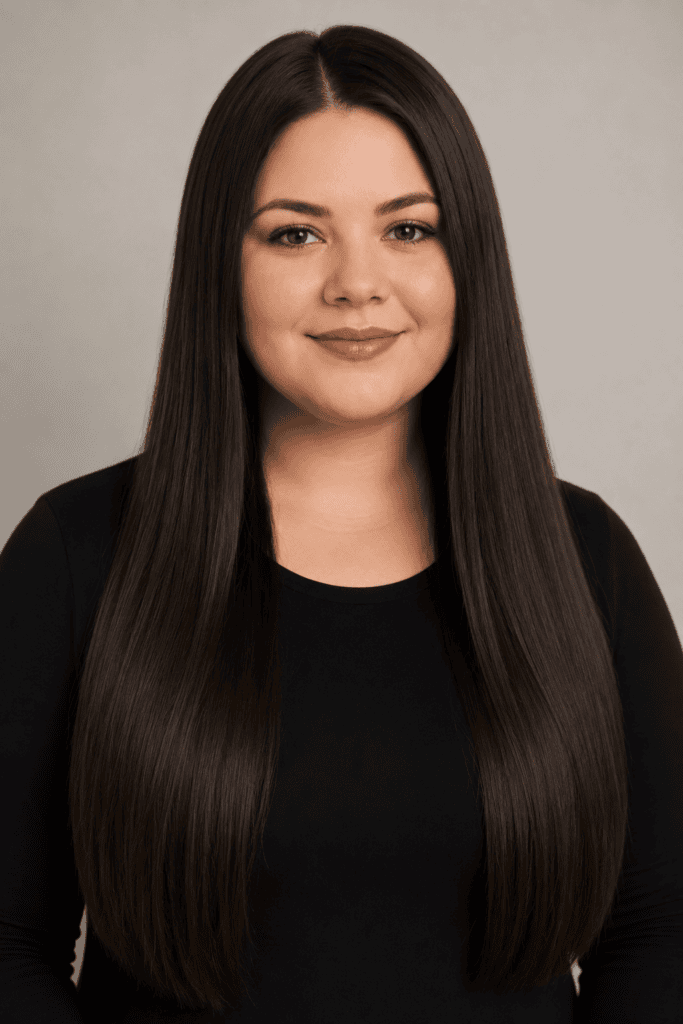
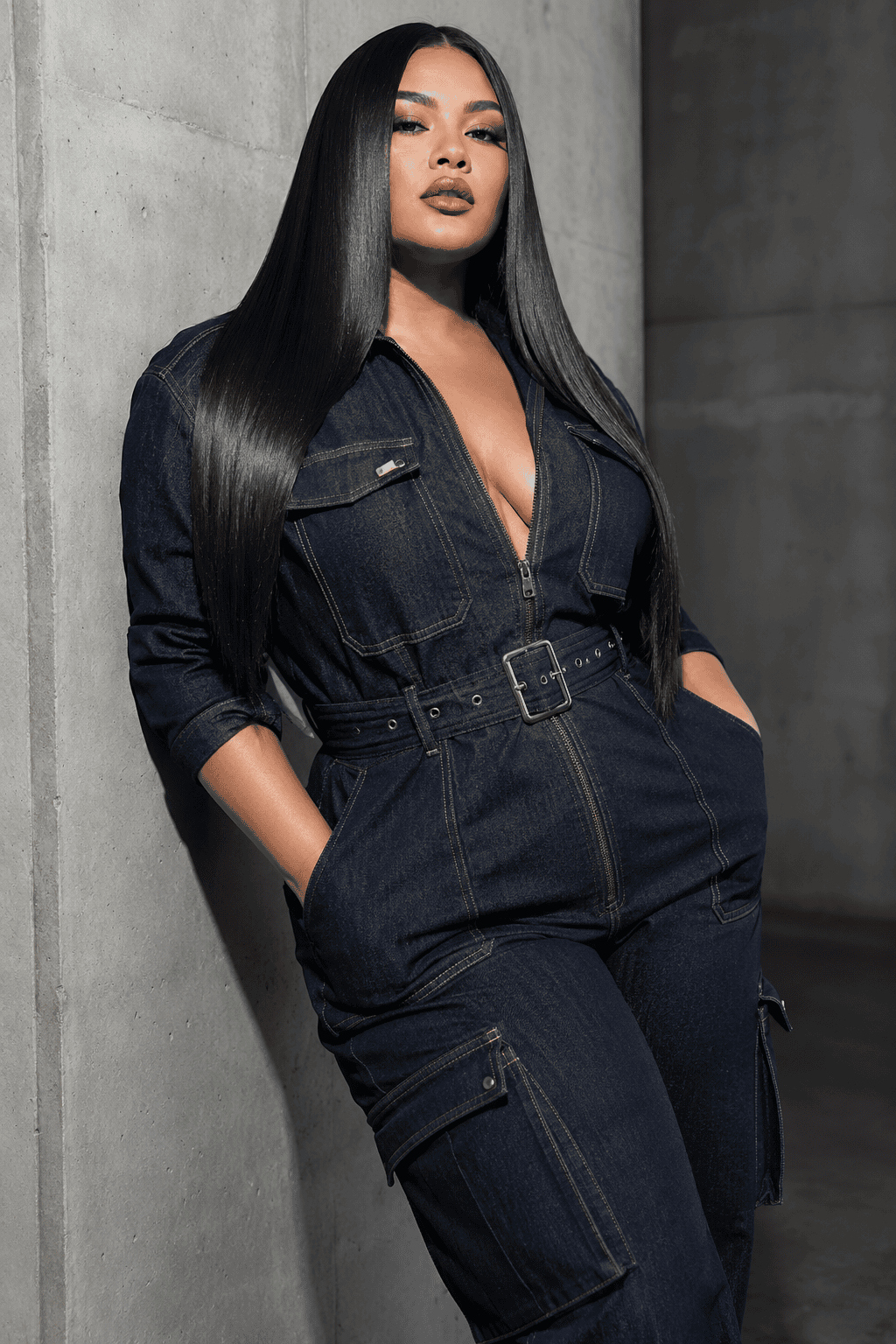
Long, straight hair with minimal layering near the face creates a single, clean vertical line from root to end. This uninterrupted line is one of the most direct ways to visually elongate a round face.
Layers should be avoided anywhere above the chin in this style, since any interruption near the face reduces the elongating effect of the overall length.
11. The Pixie Cut with Height
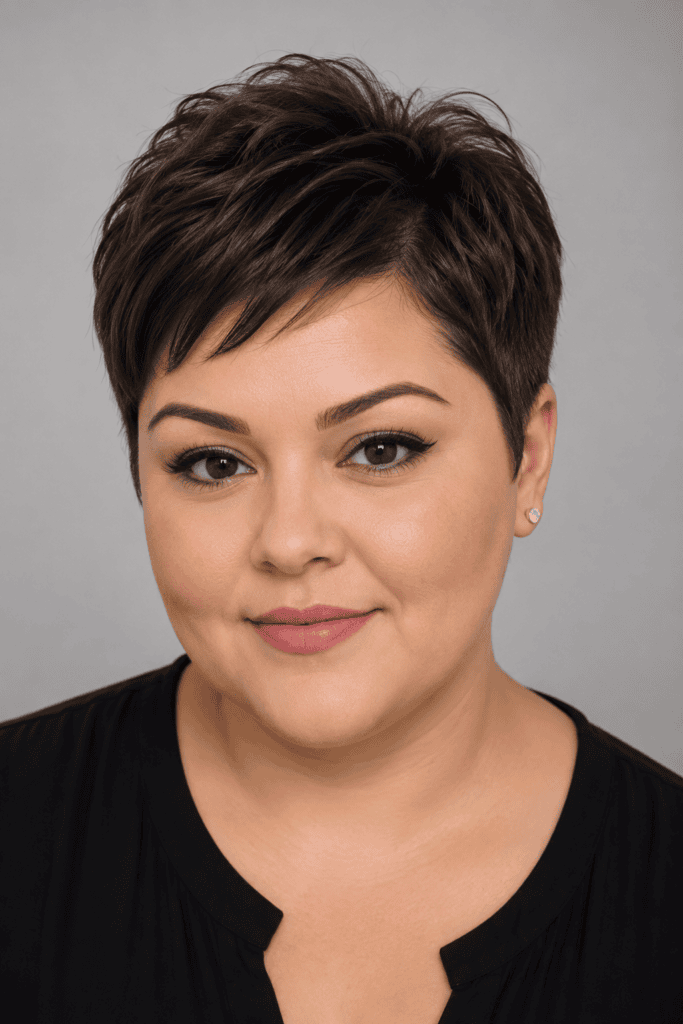
A pixie cut with added volume at the crown and slightly longer pieces at the front can work well on round faces despite the shorter overall length. The key is ensuring the length and volume are concentrated at the top rather than the sides.
- Keep the sides and back cut close to the head
- Maintain length through the top and front sections
- Style with a slight lift at the roots to reinforce vertical volume
12. Soft, Undone Waves
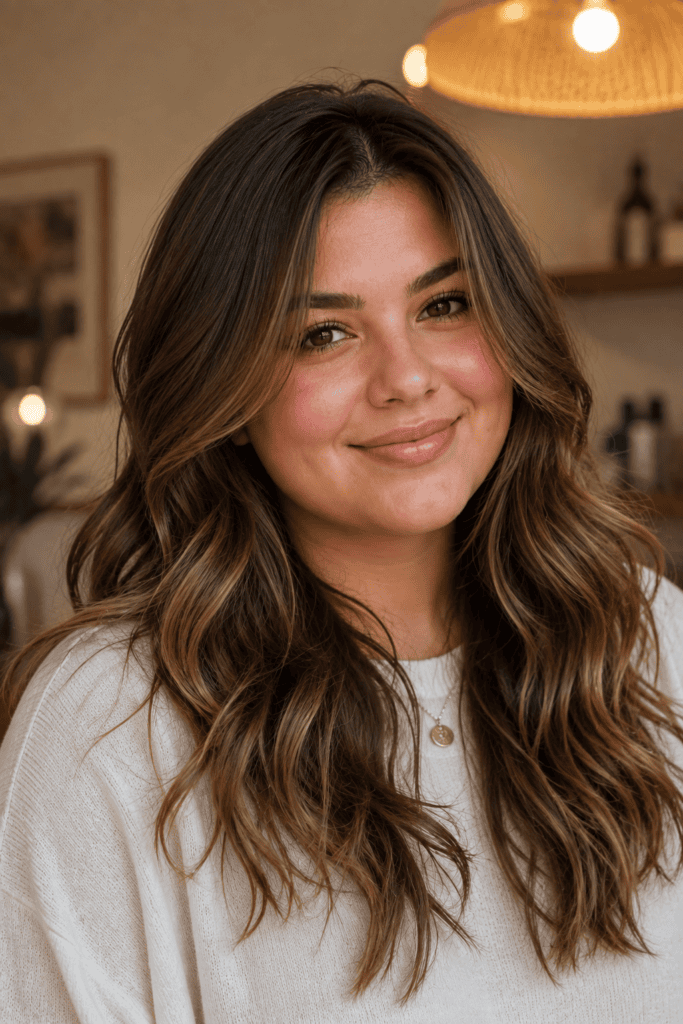
Loose, undone waves starting below the cheekbones add movement without introducing the width that tight, uniform curls typically create. The irregular pattern of the waves breaks up roundness rather than reinforcing it.
Using a wide-barrel curling tool and avoiding curling the top two inches near the roots helps maintain a natural, elongating result rather than a rounded, bulky one.
13. The Half-Up Style with Face-Framing Pieces
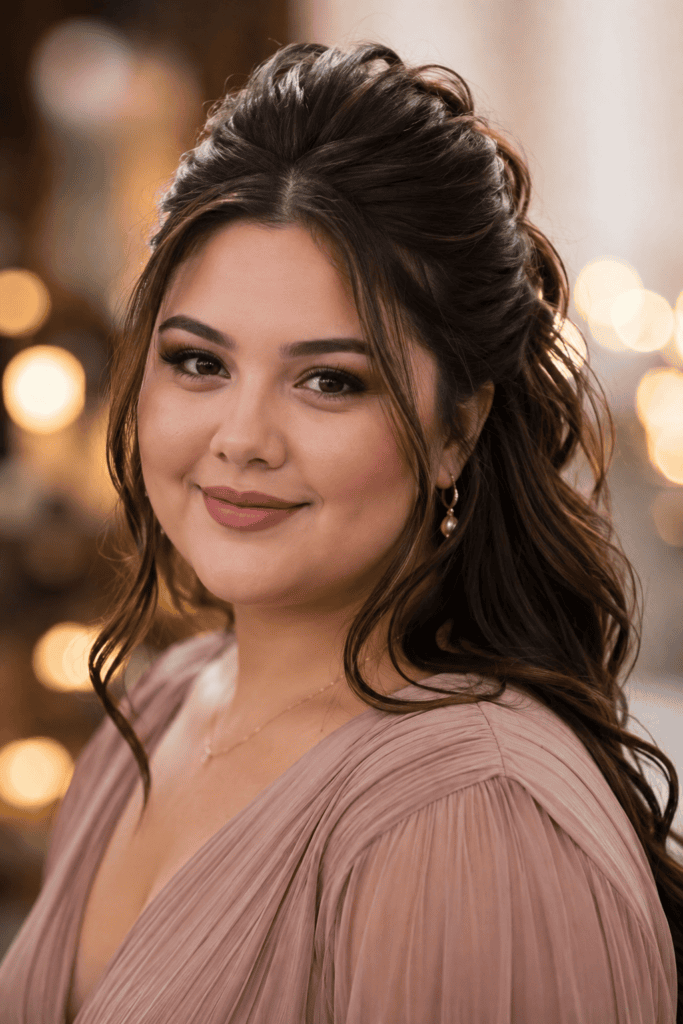
A half-up style, combined with a bit of height at the crown and a few loose strands framing the face, delivers lift, definition, and length simultaneously. This style is a practical, lower-effort way to combine several of the elongating techniques already mentioned into a single look.
14. Long Layers with a Deep Side Fringe
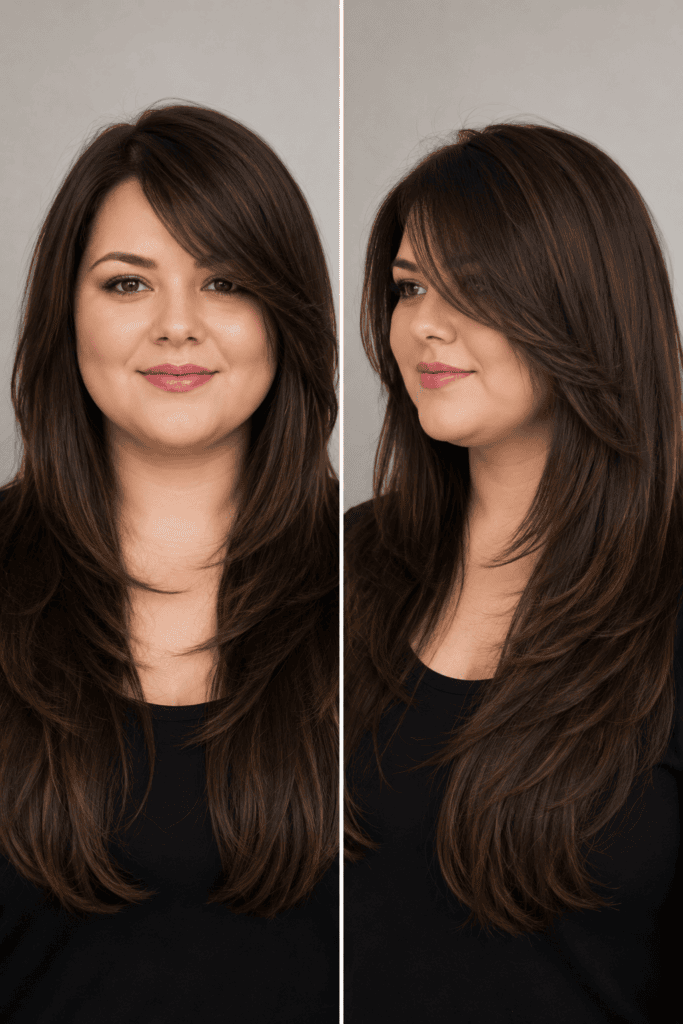
Combining long layers with a deep side fringe addresses round-face styling from two directions at once — the layers add vertical length, while the fringe introduces asymmetry. This pairing is one of the more comprehensive options on this list, since it layers multiple elongating techniques together.
15. Angled Lob with Balayage
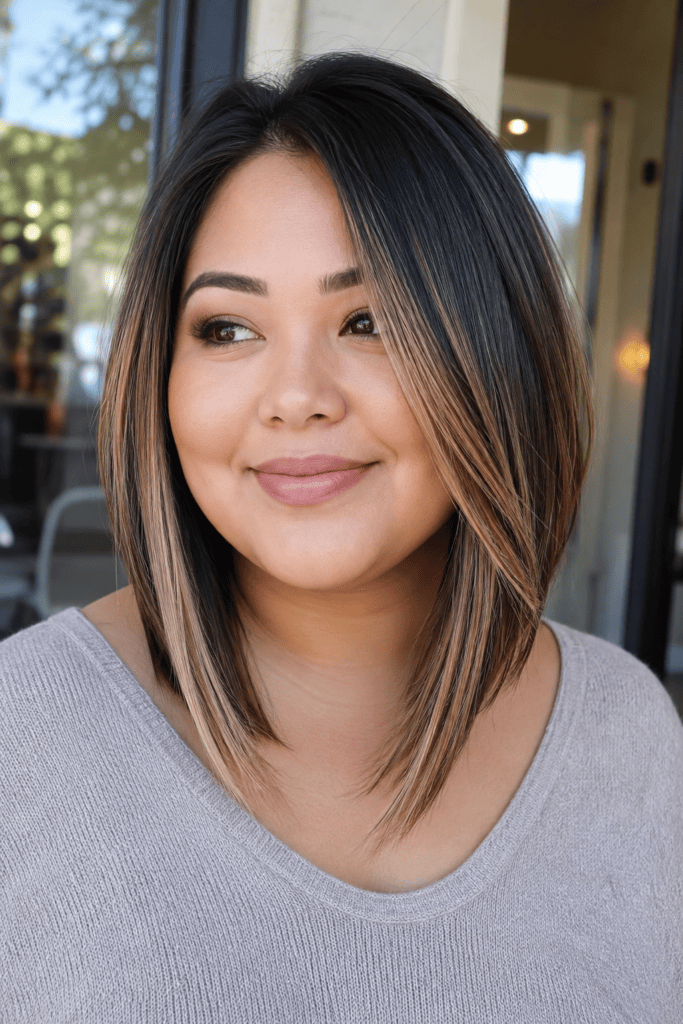
Adding balayage or face-framing highlights to an angled lob introduces contrast that creates additional visual lines beyond what the cut alone provides. Lighter pieces placed around the cheekbones draw attention toward the center of the face rather than emphasizing its width.
This option is worth considering for those who want their hair color to reinforce the same slimming effect the cut is designed to achieve.
16. The Wolf Cut
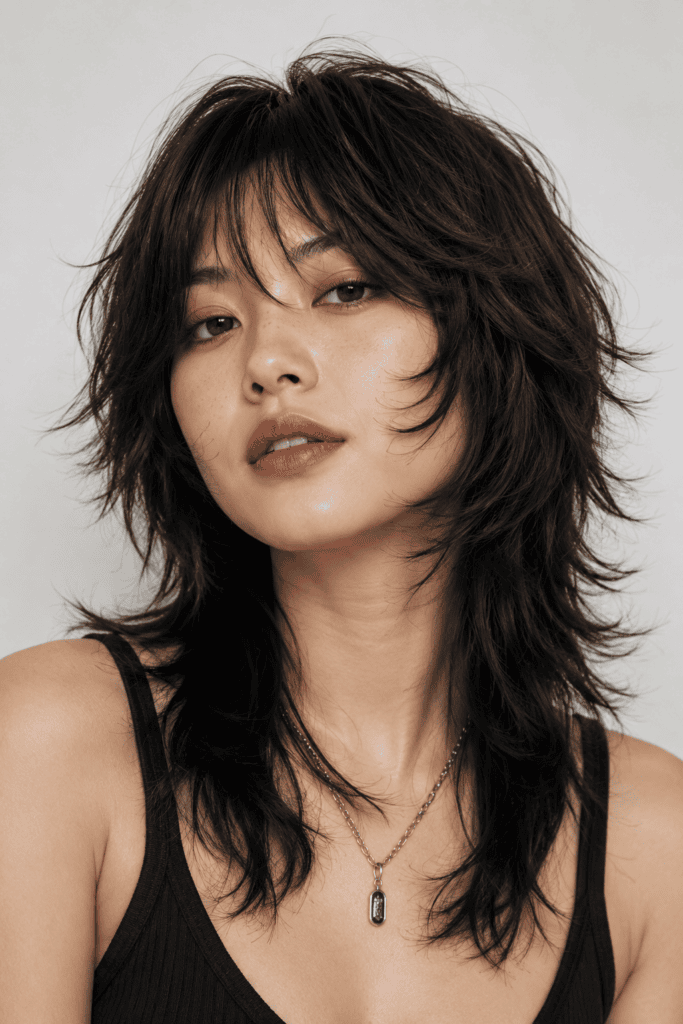
A wolf cut blends the heavy texture of a shag with the added length of a mullet-inspired silhouette. Heavy layering throughout, combined with face-framing pieces at the front, creates constant movement that prevents the eye from settling on any one rounded area.
This style requires more regular styling maintenance than some of the others on this list but offers a distinctly modern, textured result.
17. Long Hair with a Center Part and Subtle Layers

A center part paired with long, subtly layered hair relies on vertical symmetry combined with soft movement around the jaw to elongate the face without a dramatic cut. This is one of the lowest-maintenance options on the list while still delivering a flattering result.
Styling Cheat Sheet
Styles to avoid:
- Blunt bobs ending at jaw-length
- Blunt, straight-across fringes
- Tight, uniform curls throughout
- Center-parted short bobs without layering
Styles to choose:
- Long layers extending past the jaw
- Side-swept or curtain fringes
- Angled or A-line cuts
- Added volume at the crown
- Deep side parts
What to request at the salon:
- Face-framing layers starting no higher than the cheekbone
- Razor-cut or point-cut ends for texture
- Length concentrated through the front rather than the sides
Maintenance and Upkeep Considerations
The amount of upkeep required varies significantly across these 17 styles, which is worth factoring into the final decision alongside face-shape compatibility.
- Low maintenance: long layers, center-parted long hair, half-up styles, and deep side parts require little more than a trim every few months and minimal daily styling.
- Moderate maintenance: lobs, A-line bobs, and curtain bangs typically need trims every six to eight weeks to maintain their shape and prevent the elongating lines from growing out.
- Higher maintenance: shag cuts, wolf cuts, and pixie cuts with height require more frequent trims, often every four to six weeks, along with daily styling to maintain volume and texture.
Color treatments, such as the balayage mentioned for the angled lob, also require periodic touch-ups, typically every eight to twelve weeks depending on hair growth rate and the contrast level chosen.
Final Takeaway
Round faces have significantly more flattering hairstyle options than commonly assumed, and the underlying principle behind all 17 styles above is the same: introduce vertical lines, add asymmetry, and place volume at the crown rather than the sides. Understanding this logic makes it easier to adapt any of these styles — or request modifications from a stylist — based on personal hair texture, length preference, and maintenance level.